

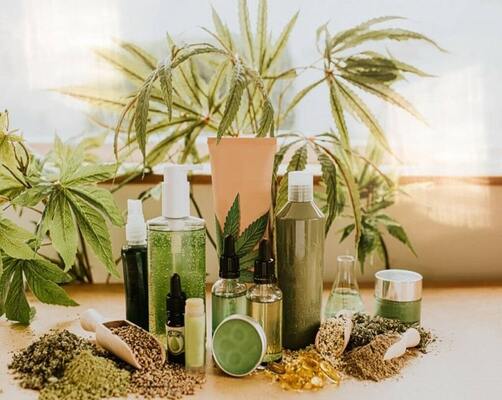
In the US, hemp-derived cannabis is legal under Farm Bill 2018 but different states independently regulate the production and sale of cannabis. In this regard, Massachusetts has some strict regulations for the legal status of CBD products derived from hemp. CBD oil is not permitted to be used in any food and beverages as per current CBD laws. This is also true for its selling into the market for any medical or therapeutic purpose until the FDA evaluates the CBD product and approves it. The state of Massachusetts has no plan currently to regulate the hemp and its derived CBD.
CBD Possession Limits in Massachusetts
In Massachusetts, cannabis derived from hemp and cannabis oil are prohibited for sale as per CBD laws in Massachusetts, due to which there are no clearly defined limits on cannabis possession. According to the Massachusetts cannabis laws, adults age 21 or older can have from 1 ounce to 10 ounces of cannabis for in-person and at-home use.
Licensing Requirements for CBD Products in Massachusetts
Anyone who wants to harvest, cultivate, process, and sell CBD products in Massachusetts then requires a license through the Massachusetts Department of Agricultural Resources. Before cultivation and harvesting, Massachusetts checks for THC content, which should be less than 0.3%. With the current laws on CBD, the cannabis derived from industrial hemp is banned and the sale of CBD products in Massachusetts is prohibited. The state is evaluating the federal laws of CBD derived from hemp for its safe use in food and beverages or dietary supplements. Massachusetts is planning for regulating the retailers for selling the CBD products, including CBD oil.
Sale of Products Derived from Industrial Hemp
The selling of industrial hemp and its products needs a license. The license types include
-
Licensed grower to licensed grower in Massachusetts
-
Licensed Grower to Licensed Processor in Massachusetts
-
Licensed Processor to a retail facility in Massachusetts
Any person who wants to indulge in activities mentioned above requires a license for selling CBD products in Massachusetts as per M.G.L. c. 128, section 118 policy mentioned; however, if you wish to sell the CBD products derived from hemp, then you should regulate with federal and state laws or any other rules and requirements by the FDA.
License Fees
There are different licenses fees according to the difference in the licenses types in the Massachusetts industrial hemp licensing program, like
-
The producer license application fee is $100 non-refundable and the licenses fee is $300
-
The processor license application fee is $100 non-refundable and the licenses fee is $300
-
The producer/processor license application fee is $100 non-refundable and the licenses fee is $500
Applicable Laws on the Sale of CBD Products
The products to be sold must comply with
-
Federal Food, Drug, and Cosmetic Act
-
Section 351 of the Public Health Service Act
-
Department of Public Health guidance.
-
Products must be allowed for sale under the Policy
The CBD Products Which Are Approved for Selling
The following products, as per M.G.L. c. 128, section 117, FDA, and DPH guidance, are approved for the hemp plant:
-
Seed oil
-
Seed powder
-
Hemp protein
-
Flower or plant for licensed grower and processor
The CBD Products Which are Not Approved for Selling
The following products are not approved by the state under M.G.L. c. 128, section 117 and also these products are prohibited by FDA and DPH also
-
Hemp-derived CBD products claiming the therapeutic effect
-
Hemp products in the dietary supplement
-
Hemp products in animal feed
-
Raw or unprocessed plant material
Compliance With the State Rules
Any individual who wishes to start selling the CBD products will be given license assistance, especially for the selling of any hemp-derived CBD product but under the state policies. However, it is your responsibility to review and understand the sections of the policy for conducting the sale of hemp-derived CBD products. If a person fails to comply, it may result in actions from the Department of Public Health, law enforcement, or local health boards. This may include
-
A prohibition from selling hemp-derived CBD products in the future
-
Seizure of illegal products
-
Destruction of illegal products
-
Termination of license
-
And any other legal action