

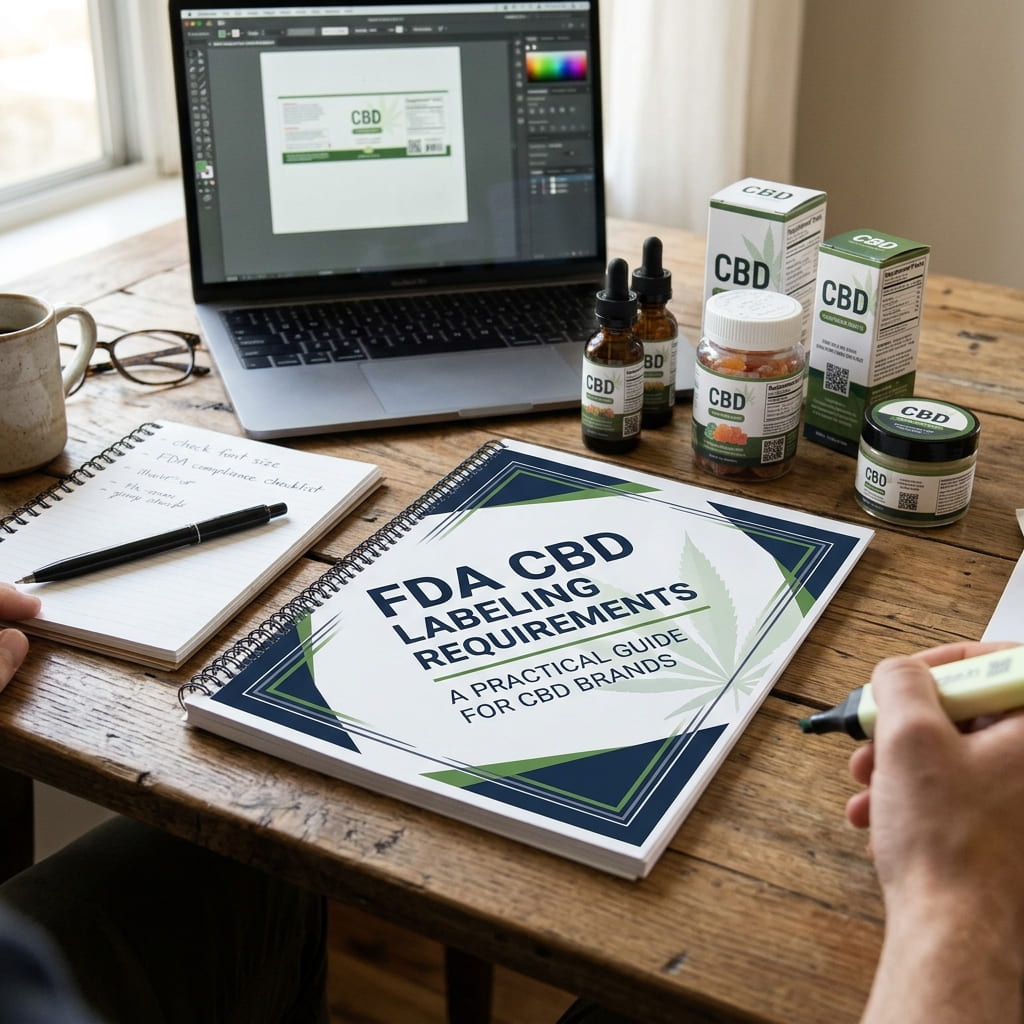
If you are looking for FDA CBD labeling requirements, the honest answer is that there is no single FDA rulebook written just for CBD labels. Instead, the FDA’s general rules for the product category apply, depending on whether your product is sold as a food, a dietary supplement, a cosmetic or something else. Most of the detailed, CBD-specific label rules come from individual states.
That patchwork makes labeling one of the most confusing parts of running a CBD brand. A box that works in one state may need changes before it can be sold in the next.
This guide explains what the FDA’s role looks like, why product claims matter so much, how a state like Texas adds detail and how to design packaging that is easier to keep up to date. It is general information, not legal advice, so always confirm the current rules for every state you sell in.
What the FDA Regulates
The FDA oversees foods, drugs, dietary supplements and cosmetics in the United States. Its labeling rules are written for those categories, not for any single ingredient.
The agency has taken a cautious stance on CBD. It has said that the existing frameworks for foods and dietary supplements are not a good fit for CBD and has asked Congress for a new regulatory pathway. You can follow the latest position on its CBD regulation page.
This is not the same as having no rules. Cosmetics, for example, already follow federal labeling rules for things like ingredient listing and net contents. If you sell a CBD balm or lotion, those general cosmetic rules still matter.
Why Product Claims Matter Most
Here’s the thing: the label issue that most often gets CBD companies into trouble is not font size or layout. It is claims.
The FDA has sent warning letters to companies that marketed CBD products with claims to treat, cure or prevent diseases. Claims like these can cause a product to be treated as an unapproved drug.
When you write your label, box copy and product descriptions, stick to factual, descriptive language: what the product is, how much CBD it contains, how to use it and what is in it. Avoid medical promises, even indirect ones. That single habit removes a lot of risk.
How State Rules Add Detail
Most of the specific label checklists come from states. Each state sets its own rules for hemp and CBD products, and many update them regularly.
Texas is a useful example. Its labeling rules for consumable hemp products call for details such as the product name, batch or lot information, the manufacturer and a link to a certificate of analysis, often through a URL alongside a QR code. Texas has also proposed further changes, so brands selling there should check the current text before printing.
Other states take different approaches. Some require child-resistant packaging, some require specific warning statements and some focus on THC content disclosures. If you sell online across many states, the strictest rules you face often shape your label.
A Typical CBD Label Checklist
The table below lists label elements that commonly appear across state rules and good practice. Treat it as a planning aid, then confirm which items your states require.
| Label element | Typical purpose | Where it usually goes |
| Product name and type | Tells customers what the product is | Front panel |
| Total CBD and CBD per serving | Shows strength clearly | Front and side panels |
| Net contents | States how much product is in the pack | Front or bottom |
| Ingredients | Lists what is in the product | Side or back |
| Batch or lot number | Links the product to testing | Back or bottom |
| Certificate of analysis link or QR code | Gives access to lab results | Back, near the batch number |
| Manufacturer or distributor details | Shows who is responsible | Back panel |
| Suggested use | Explains how to use the product | Side or back |
| Warnings | Shares required or recommended cautions | Back panel |
Child-Resistant Packaging and Labels
Some states require child-resistant packaging for CBD products that are eaten or swallowed. That requirement usually sits alongside label rules, not inside them, but it affects your packaging design.
In most setups, the child-resistant part is the inner container, such as a dropper bottle with a certified cap or a locking pouch for gummies. The outer box stays free to carry your branding and label information. This keeps the premium look while meeting the safety requirement. Ask your container supplier for test documentation and keep it on file.
Designing Labels That Are Easy to Update
Because rules change, your packaging should be easy to adjust. A few design choices help a lot:
- Group required details together. Keep batch numbers, QR codes, warnings and manufacturer details in one area, so updates do not require a full redesign.
- Leave space for change. A little extra room on the back panel makes it easier to add a new warning later.
- Use labels for variable information. Some brands print the box design once and add batch details with a small label, which keeps box stock usable across batches.
- Keep one master artwork file. Track which version is approved for which state.
- Review rules before each reorder. A quick check before printing can prevent costly reprints.
Keeping a Premium Look
Compliance and good design are not competing goals. A clean front panel, with your brand, product name, strength and extract type, does most of the selling. The required detail can live on the sides and back, laid out neatly.
Good finishes help too. Matte coatings, foil logos and soft-touch surfaces make a box feel premium, while clear, well-spaced text on the back makes it feel trustworthy. Customers often read both before they buy.
Working With Your Packaging Supplier
Your packaging supplier can help with structure, materials, printing and finishes. They can also help you plan space for labels and QR codes. What they cannot do is confirm which rules apply to your product in each state. That stays with your brand, ideally with advice from someone who follows the regulations closely.
Before you approve artwork, share your label content with your supplier early, so the box size and layout leave enough room for everything you need to print.
Online Listings Count Too
Labels are not the only place claims appear. Product pages, social media posts and marketplace listings are often read alongside your packaging, and regulators can look at them too. Keep the language on your website and listings consistent with your box: the same product name, the same strength and the same factual descriptions.
A simple way to manage this is a single product information sheet for each item. It lists the approved name, strength, ingredients, suggested use and any warnings. Your packaging designer, website team and marketplace managers all work from the same sheet, which cuts the risk of one channel saying something another does not.
Keep Records of Every Version
When rules change, you may need to show which label was on the market and when. Keep a dated record of each approved artwork file, the states it was approved for and the batch numbers it was used on. This makes audits and questions from retailers far easier to answer, and it helps you plan updates when a state revises its requirements.
FAQs
Does the FDA have specific labeling rules for CBD?
There is no FDA labeling rule written only for CBD. The FDA’s general rules for the product category, such as cosmetics, apply, while most CBD-specific label requirements come from individual states.
What are the Texas CBD labeling requirements?
Texas rules for consumable hemp products call for details such as the product name, batch or lot information, manufacturer details and a link to a certificate of analysis. Check the Texas Department of State Health Services for the current list, because the rules have been under review.
Can I put health claims on a CBD label?
Avoid claims that a product treats, cures or prevents a disease. The FDA has warned companies over these kinds of claims, so stick to factual descriptions of the product.
Are CBD boxes safe?
Paperboard and rigid CBD boxes are generally safe as outer packaging. If packaging will touch food products like gummies directly, confirm with your supplier that it is suitable for food contact.
How should CBD gummies and flower be stored?
Store gummies sealed, somewhere cool and dry, away from heat. Store CBD flower in an airtight, light-blocking container in a cool, dark place to protect freshness and aroma.
Clear Labels Travel Further
In a market where rules differ from state to state, the brands that grow fastest are often the ones whose packaging can adapt without starting over. A clear, well-organized label is easier to update, easier to read and easier to trust.
When you are planning new packaging, CBD Boxes offers custom CBD boxes, tincture boxes and gummy packaging with room for the label details your states require. Talk to the team about layouts that fit your range.