

Establishing a business requires significant effort. But to start a high-risk merchant account in businesses underpinning CBD or kratom? That's an entirely different story. They are popular because of possible health benefits, but they face legal, financial, and regulatory challenges. But the good news for you is that demand is growing. The global market for CBD is now expected to reach $47.22 billion by 2028 and kratom sales still continue to rise. If you have the right approach, obstacles can become opportunities, and you can also create a legal and profitable business in this booming industry.
But then again, starting a high-risk business is not your everyday cup of tea. Search high and low for a reliable payment processor, and the need for a good payment processor can feel very much like a needle in a haystack. You need just the right suppliers, just the right legal expertise, and just the right marketing strategy to get and stay ahead of the game. Therefore, this guide will assist you at every stage of the process, aiming to simplify the learning process rather than complicating it.
This guide covers everything from working your way through complicated laws to selecting reliable providers to work with. Everything we will cover in a simple way, because you do not need a law degree to understand it. Whether you want to start an online store or start a brick-and-mortar store, here are expert tips for building a sustainable business. So, are you ready to make it a reality? Let’s get started.
What Are CBD and Kratom?
Now, on to the business side of things, but before we get into that, let us understand what exactly CBD and kratom are.
a. CBD
Cannabinoid found in cannabis plants. It does not have psychoactive effects like THC; it is used for pain relief, anxiety, sleep, and others. In October 2023, the world CBD market was worth 125.0 billion dollars, $4.9 billion in 2021, and is predicted to reach a high; it was worth 4.9 billion in 2021, and it is predicted to increase to 47.22 billion by 2028.
b. Kratom
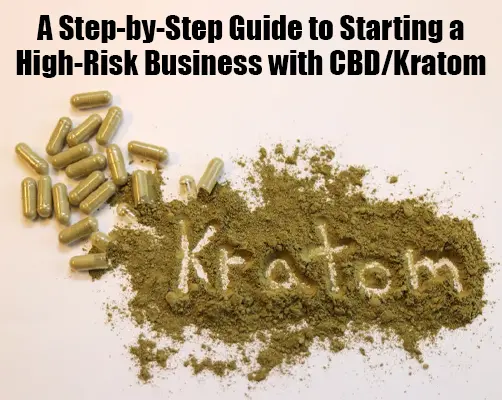
An evergreen tree found in Southeast Asia. The leaves are used for treatment of pain, energy, and opioid withdrawal. The kratom market is smaller but growing, with increasing demand in the U.S. and Europe.
These are controversial products. Some tout their advantages, while superintendents and regulators are working on the best way to offer them. Because of this uncertainty, the industry is high-risk and high-reward.
Step 1: Understand Legal Landscape
The first step to winning is knowing the game itself. It should be noted that laws concerning CBD and kratom vary considerably and change over time.
a. CBD Laws
With the passing of the 2018 Farm Bill, CBD derived from hemp (with a THC content of less than 0.3%) was legalized on the federal level. But CBD has not been approved by the FDA for use in foods, beverages, or dietary supplements. At the state level, some states have more rigid regulations. By way of example, certain CBD products are outright banned in Idaho and South Dakota.
b. Kratom Laws
Kratom is legal nationally, but it has been flagged for danger by the FDA and DEA. Some states, such as Alabama and Wisconsin, have implemented bans on kratom. Third parties have taken this route with Utah and Arizona both enacting the Kratom Consumer Protection Act. Find an attorney who specializes in cannabis or kratom laws. They can assist you as you try to de-mystify the troublesome jurisdiction of compliance.
Step 2: Research the Market
Understanding market trends, demographics, and challenges is one of the key factors to be known before entering into the CBD or kratom industry. The worldwide CBD market is anticipated to reach $47.22 billion by 2028.
The kratom danger vegetation is a quickly growing industry, projected to climb to a momentum of $5.69 billion via 2028. Pain relief, anxiety, and overall health are just some of the natural wellness alternatives consumers are looking for.
Target Audience
- Wellness enthusiasts
- People struggling with chronic pain or anxiety
- People who exercise, athletes.
- Alternative medicine users
Survey, competitive research, and trend analysis when determining which segment to target.
Step 3: Create a Business Plan
You have a solid business plan that serves as both a map to success and a guide through every phase of your CBD or kratom business. Is helpful for keeping track of things, attracting investors, and getting through difficult times. Begin with an overview, a concise but impactful representation of your business objectives, mission, and vision. Next, move on to market analysis research your target market, your competitors, and the market trends in your industry to know exactly how you fit in.
The list of products you will sell, including the product line, derives the types of CBD or kratom products you will carry from it (oils, capsules, edibles, etc.). Finally, your marketing strategy is also vital; this should explain the way you will acquire and retain customers via SEO, content marketing, social media, and promotions. Finally and most importantly, a financial plan is needed for sustaining growth. This encompasses your budget, pricing strategy, and revenue forecasts.
If the business you are working with sells CBD gummies, the financial plan may provide an in-depth structure of the cost of ingredients, cost of packaging, cost of marketing, and cost of distribution. Let’s say that each unit costs $5 to make and sells for $20: you may need to start figuring out your expected sales and profit. A good business plan guide ensures that you stay on course, make sound financial decisions, and grow your business as required.
Step 4: Select a Business Entity
Everything you do with your business, from taxes to liability, is impacted by the structure you choose. Here are your options:
- Sole Proprietorship: Simple to establish, but personally liable for debts.
- Limited Liability Company (LLC): Protects against liability, additional tax flexibility.
- Corporations: ideal for large organizations but more complex and costly.
An LLC offers a compromise between simplicity and protection, which is why it is the most common entity type for CBD and kratom businesses.
Step 5: Find a Supplier You Can Trust
Good quality products can significantly impact your business. Look for suppliers who:
- A copy of third-party lab test (to verify purity and potency)
- Maintain good manufacturing practice (GMP)
- Get good reviews and strong credibility
For CBD, look for domestic U.S.-sourced hemp, as it is Farm Bill compliant. For kratom, seek suppliers who responsibly source from Southeast Asia.
Step 6: Take Care of Licensing and Permits
Higher-risk businesses also require more paperwork than the average organization. This is what you will probably require:
- Business License: Most states will require one
- Seller’s Permit: If you are selling products to consumers directly.
- FDA Compliance: While CBD and kratom are not completely under the jurisdiction of the FDA, you still must adhere to their guidelines for labeling and safety.
Important: They are careful as some payment processors and banks may not support CBD and kratom businesses. Shop around for financial services.
Step 7: Build Your Brand
Your brand is your narrative and your trust that you create. How to normalize a strong brand:
- Pick a name that you will not forget, and ensure it is not a trademarked name.
- Create a Logo that looks professional. Use Canva or hire a designer.
- Build a website, information on products, laboratory results, and consumer reviews.
- Show your sourcing and testing practices to develop a sense of trust.
Example: Lazarus Naturals (CBD) and Happy Hippo Herbals (kratom) have both nailed transparency and quality.
Step 8: Market Your Business
Pure marketing is the key to differentiating your CBD or kratom business in a crowded industry. How it helps you attract customers, create brand loyalty, and eventually drive sales because good strategy is everything. Begin with using social media channels such as Instagram and TikTok, where you share your products in the form of posts and short videos. Paid ads for CBD and kratom are restricted, so make sure you grow organically with quality content and partnerships with influencers.
Content marketing is the greatest tool ever. Spend some time providing your audience with information through blog posts, educational videos, and customer testimonials. This should go hand in hand with the SEO trick, like having your website optimized for keywords such as “best CBD oil for anxiety” or “buy kratom online.”. Email marketing is also an excellent way to ensure repeat supply; build a list of subscribers and send those customers exclusive promotions, product announcements, and helpful information.
Step 9: Stay Compliant
Even upon launch, they still continue the rules. You need to stay on top of:
- Fulfill labeling requirements such as ingredients, dosage, and warnings.
- Many high-risk businesses end up paying a higher tax.
- The legality of CBD and kratom is ever-changing. If you want to avoid surprises, educate yourself.
Step 10: Scale Your Business
After you have your CBD or kratom business up and running, the next step is growth. Branches out to new customers and keeps current customers interested. Flavors, strength, and novel formats (gummies, capsules, topicals, etc.). You reach a wider audience and have the potential to upsell by having more offerings, which can be supportive.
Another solution to scale is to engage in new markets. There are states and countries where it is much easier to sell CBD and kratom because the laws are more pro-business. Explore where permitted and compound where demand is great. Another effective strategy for growth is partnering with wellness influencers. Using influencers, who have dedicated followers that trust their recommendations, can instantly build awareness and credibility for your brand.
A small CBD brand may sell oils at first, then begin to branch out into edibles, topicals, and even pet goods. As you gain traction, the way forward is to take careful steps toward doing so in order to transform a small business into a prosperous brand without falling behind rivals.
Final Thoughts
Starting a high-risk business based on hemp-derived CBD or kratom is a challenging endeavor. Doing curbs well requires research, preparation, and pivoting. Yet if handled properly, challenges can also be opportunities. Stay informed, be compliant, and always make your customers come first, and you will keep winning.