

Choosing a THC vape product used to come down to flavor, price, and maybe a brand name you recognized from a friend’s recommendation. That is no longer enough. As the hemp-derived market has grown, consumers have gotten sharper about asking what is actually inside a cartridge and how anyone can verify it before it ever reaches a mouthpiece. That shift shows up clearly in North Carolina, where a mix of physical storefronts and online retailers means buyers increasingly compare not just price and strain names, but which sellers can actually back up their claims with real testing.
Lab testing has become one of the clearest signals separating a serious operation from one hoping nobody checks. No test eliminates every risk, but independent laboratory analysis gives a buyer something a label alone never can: verifiable information about what a product actually contains.
Why Third-Party Testing Is Different From a Label Claim
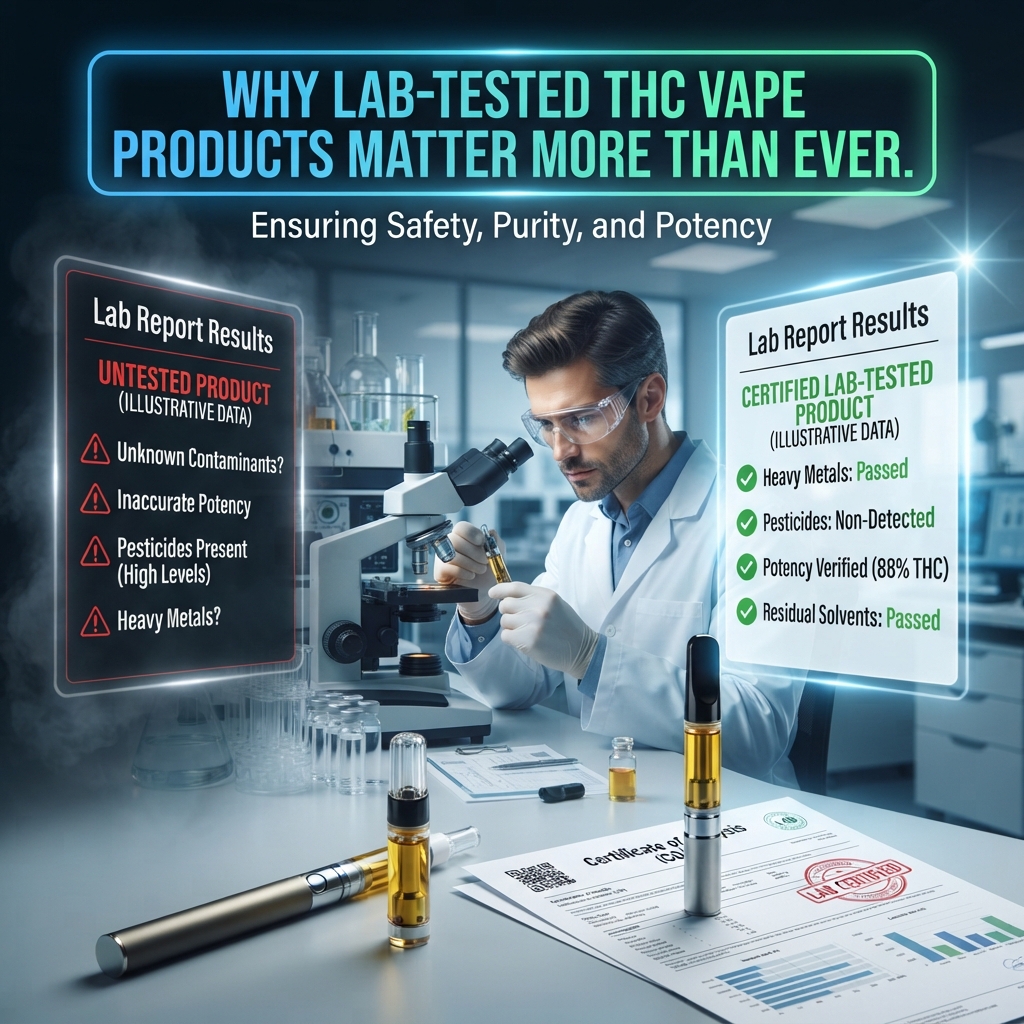
A label is written by the company selling the product. A Certificate of Analysis is written by an independent lab that has no financial stake in the outcome, testing a specific batch for cannabinoid content and, where required, screening for contaminants that would never show up in marketing copy. That distinction is the entire point. A brand can print any number it wants on packaging. An independent lab either confirms that number or it does not.
Because cannabis and hemp-derived products vary somewhat from batch to batch depending on the plant material and extraction run, ongoing testing is what actually lets a manufacturer verify that quality holds steady over time, rather than assuming it does.
A THC Percentage Is Not the Whole Story
Most buyers look first at the THC number on the package, understandably, since potency is the most immediately relevant figure. But potency is only one piece of what a genuinely thorough test actually measures.
A full-panel lab result should also screen for residual solvents left over from extraction, heavy metals, pesticides, and microbial contamination, none of which show up anywhere on a product’s front label. The FDA has directly documented why this matters: its own running list of warning letters issued to cannabis-derived product companies, including several firms based right here in North Carolina, shows a long, ongoing pattern of products making claims that did not hold up to independent scrutiny. Looking past the THC percentage on the front of a package is exactly what catches the kind of gap that list keeps documenting.
Transparency Is What Separates Trust From Marketing
The clearest sign of a trustworthy seller is whether they let you check their work. A company willing to publish batch-specific lab results, rather than making customers request them or simply promise they exist, is showing you something a slogan cannot fake.
Shoppers looking into THC vape carts increasingly treat this as a baseline expectation rather than a bonus feature, checking whether test results are actually linked from the product page itself before ever adding something to a cart.
The Hemp Doctor publishes public lab results directly on its site for every vape product it sells, giving customers a batch-specific COA to review before checkout rather than a promise to send one later if asked.
Consistency Is What Keeps You Coming Back
Anyone who finds a product they like usually wants that same experience the next time they buy it. Batch testing and consistent manufacturing are what actually make that expectation realistic, verifying that a new batch falls within the same specifications as the one before it.
Without that kind of ongoing quality control, noticeable drift between batches becomes far more likely, and a product that worked well once can quietly become unpredictable without any change to the label at all.
A Maturing Market Is Raising the Bar
The hemp-derived cannabis market continues to evolve, with consumers placing greater value on transparency, consistent quality, and product testing than ever before. While testing and labeling requirements still vary between states, many manufacturers are choosing to exceed minimum regulatory standards by investing in stronger quality assurance practices.
That proactive approach not only helps build consumer trust today but also positions businesses to adapt more easily as regulations continue to develop. In a rapidly changing industry, companies that prioritize transparency and product quality are often better prepared for long-term success.
Questions Worth Asking Before You Buy
A few direct questions can save a lot of guesswork before a purchase:
- Does the seller publish independent lab results, or only mention that testing exists?
- Are the results specific to the actual batch you are buying, not a generic or outdated sample?
- Does the COA cover more than potency, including contaminant screening?
- Is this information easy to find, or buried several clicks deep?
Taking a few extra minutes to review this information can help consumers make more informed purchasing decisions.
Final Thoughts
Lab-tested THC vape products matter now more than at any point in the market’s short history, not because testing itself is new, but because consumers finally have the means and the motivation to actually check.
A Certificate of Analysis is not a marketing flourish. It is the one piece of documentation that tells you, in specific and verifiable terms, what you are actually inhaling. As the market keeps maturing, choosing sellers who make that information easy to find, rather than hard to track down, remains one of the simplest and most effective ways to buy with real confidence.