

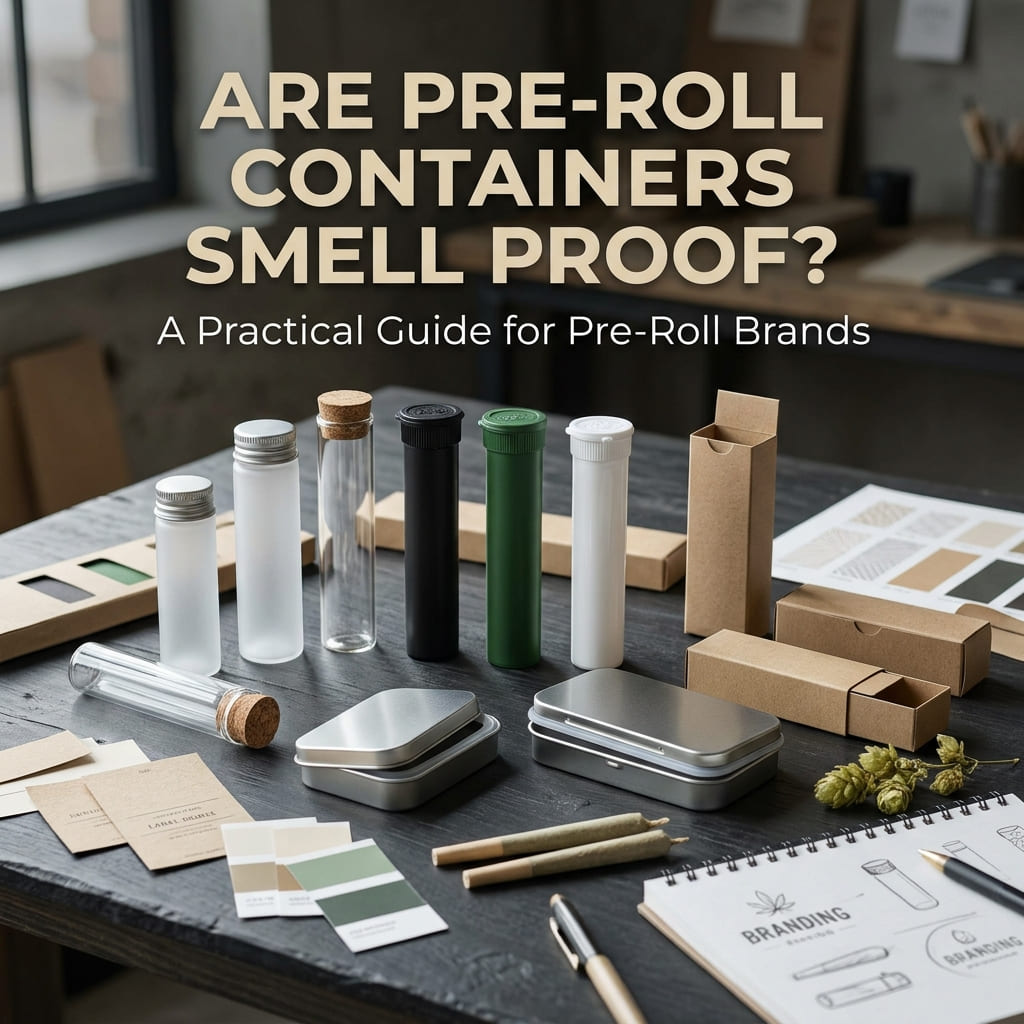
Are pre roll containers smell proof? Some are, but many are only smell resistant. Whether a container holds odor in depends on three things: the material, the seal and how well the pre-roll fits inside. A glass tube with a tight, gasketed cap typically does far better than a thin plastic pop-top, and a printed box on its own does very little.
That difference matters to you as a brand owner. Customers often carry pre-rolls in a pocket, a bag or a car, and a container that leaks odor creates an awkward moment they will connect with your product.
This guide breaks down how each container type performs, why seals fail, and how to test samples before you commit to a full packaging run.
What Is a Pre Roll Container?
A pre-roll container is a package built to hold one or more pre-rolls safely between packing and use. The most common formats are tubes, tins, pouches and boxes, sometimes combined, such as a tube inside a printed outer carton.
A good container does three jobs at once. It stops the pre-roll from bending or crushing, it slows down drying, and it keeps aroma from escaping. Smell control is the hardest of those three to get right, because it depends on details you cannot see from a product photo.
Smell Proof vs Smell Resistant: The Difference That Matters
Smell proof is not a single standard. It is a marketing phrase, and suppliers use it loosely. A container that stops odor in a short sniff test may still leak slowly over a few days in a warm car.
Smell resistant is the more honest description for most containers. It means the package slows odor down noticeably, without promising a complete seal. Think of it this way: smell proof is about the seal staying tight over time, while smell resistant is about the material doing some of the work.
Here’s the thing: when a supplier calls a tube smell proof, ask what they mean. Ask about the cap design, the gasket and whether they have tested it with product inside for more than a day.
Are Pre Roll Tubes Smell Proof?
Pre-roll tubes vary more than any other format. The tube body is rarely the problem. The cap is.
A pop-top plastic tube with a simple friction cap usually lets some odor out, especially once it has been opened and closed a few times. A screw cap or a child-resistant push-and-turn cap with a gasket typically seals much better. Glass tubes with a well-fitted cap tend to perform best, because glass does not absorb odor and does not flex.
There’s a catch with plastic: thin plastics can pick up and slowly release odor over time. Thicker walls and better resins reduce this, but they also raise the cost per unit.
How Common Pre Roll Containers Compare
The table below compares the main formats for odor control, protection and branding. Use it as a starting point, then test the specific product you plan to buy.
| Container type | Odor control | Crush protection | Branding space | Common trade-off |
| Glass tube with gasketed cap | High | High | Label or sleeve | Heavier and can break |
| Thick plastic tube with screw or CR cap | Medium to high | High | Label or direct print | Quality varies by supplier |
| Thin plastic pop-top tube | Low to medium | Medium | Label | Caps loosen with use |
| Metal tin with tight lid | Medium | High | Direct print or label | Lid fit varies |
| Heat-sealed Mylar pouch | High until opened | Low | Full print | Weak after opening unless resealable |
| Paperboard box alone | Low | Medium to high | Full print | Needs an inner seal for odor |
Most brands get the best result by combining layers: a sealed tube or pouch for odor, inside a printed box for branding and protection.
Why Seals Fail
Even a good container can leak if a few small details go wrong. These are the most common causes:
- Loose cap tolerance. Caps and tubes from different batches, or different suppliers, may not fit as tightly as your samples did.
- No gasket or liner. A cap without an inner liner relies on a plastic-on-plastic fit, which loosens with use.
- Heat. Warm cars and sunny shelves soften some plastics and expand the air inside, which pushes odor out.
- Overfilling. A pre-roll that is too long or too thick for the tube can stop the cap from closing fully.
- Repeated opening. Customers who open and close a tube many times wear down the seal.
Most of these come back to fit. A tube that matches your pre-roll size closes properly. That is why fit is not only about avoiding crushed pre-rolls. It is also the foundation of smell control.
How to Test Pre Roll Containers Before You Buy
You do not need a lab to compare samples. A simple at-home test can tell you a lot.
- Order samples of every container you are considering, with the exact cap or lid you will use.
- Pack one of your actual pre-rolls in each, sized the way you sell them.
- Seal each container and place them in separate closed jars or zip bags.
- Leave them somewhere warm, like a closed car or a sunny room, for a day or two.
- Open each outer jar and compare the odor.
- Repeat after opening and closing each container several times.
The containers that still hold odor after the open-and-close test are the ones worth considering. It is a rough test, but it often reveals differences that a spec sheet hides.
Smell Control and Branding Can Work Together
Many brands worry that the best-sealing containers look plain. That is rarely a problem if you separate the jobs.
Let the inner container handle odor and freshness. Glass or thick plastic tubes can stay simple, with a small label. Then let a printed outer box, sleeve or display carton handle branding, product information and shelf presence. This approach also makes it easier to meet labeling rules, because the outer box gives you more space.
A strong design on the outer pack also helps with the other common worry: looking like every other brand in the shop. Bold color, a recognizable pattern and a consistent layout across your range make your products easy to spot, even from across the counter.
Rules to Check Before You Choose a Container
Packaging rules for hemp and CBD products vary by state and change often. Some states require child-resistant packaging, some expect opaque packaging, and many set specific label requirements.
Before you lock in a container, confirm what each state you sell in expects. Child-resistant caps often seal well, which can help with odor too, but make sure the specific cap is certified rather than assuming it. Your packaging supplier can help you compare options, but meeting the rules remains your responsibility.
Questions to Ask Your Packaging Supplier
Spec sheets rarely tell the whole story about odor control. Before you place an order, ask your supplier to confirm these points:
- Whether the cap uses a gasket or liner, and what material it is made from.
- That the tube was tested with product inside over several days, not just sealed empty.
- That caps and tubes come from the same production batch, so the fit stays consistent.
- That the child-resistant cap is certified, with documentation you can keep on file.
- Which tube diameters and lengths fit your pre-roll sizes without forcing the cap.
Clear answers usually signal a supplier who understands the product. Vague answers are a reason to order more samples before you commit.
FAQs
Are pre roll tubes smell proof?
Some are. Tubes with a gasketed screw cap or a certified child-resistant cap typically hold odor much better than simple pop-top tubes. Glass tubes usually perform best, while thin plastic tubes often leak over time.
Are pre roll containers waterproof?
Most sealed tubes and Mylar pouches resist water well, but paperboard boxes do not. Water resistance depends on the cap or seal, so check how tightly it closes before relying on it.
Are pre roll containers recyclable?
It depends on the material and your local recycling program. Glass and many paperboard boxes are widely recyclable, while small plastic tubes and multi-layer pouches are often harder to recycle. Check what your local program accepts.
How do you recycle pre roll tubes?
Empty the tube completely, remove any labels if your program asks for it, and check whether your local recycling accepts that plastic type. Some small items are not accepted curbside, so a drop-off program may be the better option.
How do you reuse pre roll tubes?
Clean tubes can be reused to store small items like spare parts, seeds or travel essentials. For selling product, always use new containers, because reused tubes may hold odor and may no longer seal properly.
The Seal Is the Product
Customers rarely think about a container until it fails them. The brands that win repeat buyers usually treat the seal as part of the product itself, testing it the same way they test the flower inside.
When you are ready to upgrade your packaging, CBD Boxes offers pre-roll boxes, pre-roll display boxes and custom CBD packaging that pair with sealed inner tubes. Send your sizes, and talk to the team about the right combination for your range.