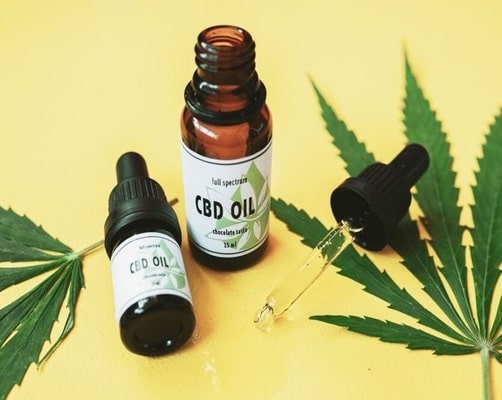
The Ultimate Guide to Indiana CBD Packaging Requirements

Have you ever heard the term CBD? A definite yes! If you're living in a state which has confirmed its utilization by law. The one we are about to discuss here is Indiana State.

If you're about to run your legal CBD business within Indiana State, you've been lucky enough to move on with the right choice. Of course, CBD buzz is all around, but the most serious thing to debate is compliance with the Packaging and Labeling of CBD products sold within the State of Indiana. Readout' The ultimate guide to Indiana CBD packaging requirements' and get your problem solved.

Before proceeding, let's have a quick introduction to CBD!

Do you know what CBD means? CBD stands for Cannabinoids. It is the second most extensive compound after THC (tetrahydrocannabinol) found in Cannabis Sativa Plants. Generally, the two names Marijuana and Industrial Hemp are the most common source of its extraction.

Also Read: CBD Packaging / Labeling Requirements California

Researchers say it is hard to distinguish between Hemp and Marijuana plants; hence after experimenting a classification is made according to the level of THC they hold. If the cannabis plant has up to 0.3% of THC or less, it can be called hemp whereas if the THC constituent is more than 0.3%, then it is said as Marijuana.

Making a calculated guess, this necessary information on CBD is sufficient enough for you. Let's get closer to an integral part of our discussion: how your legal CBD product could stand out in the market. Well! This is possible only if considering all safety measures and compliance with the State packaging requirements.

Current Status of CBD Legal Products In Indiana:

Just pause here for a second! Do you know which CBD products are legal in Indiana? Let us answer you on a quick note for your query.

It is worth knowing that Indiana State restricts the recreational use of Marijuana. It is so because Marijuana contains a higher percentage of THC contents and a lesser proportion of CBD. Whereas you already know that THC is a psychoactive cannabinoid compound responsible for creating a "high" feeling. Unlike the cousin cannabis compound, CBD is non-psychoactive. This is what many States recommend as a better and safer option. The key point to focus on is that Indiana State allows buying and selling of those Cannabis products that do not contain more than 0.3% of THC by weight.

Note that you cannot back out from the strict Indiana laws when it comes to THC usage. Before selling you've to fulfill the prerequisites such as testing its THC ratio and other components through an independent laboratory. Also, CBD packaging must be well labelled and packed according to Cannabis regulation authorities' recommendations.

What Are the Requirements of CBD Labeling and Packaging?

Well, you don't want any restriction on the sale of CBD in Indiana indeed. To keep going on, you need your reputable brand to display all the essential details necessary for your consumer wellness and knowledge. Go market and sell your CBD legal brands with the below official state recommendations

REQUIREMENT# 1

Your Labeling Must Include A QR Code:

A Quick Response code (QR) is a custom barcode ideal to display important information in less space. Needless to say, that the US has rightly integrated technology. A fine example is the packaging and labeling requirement by recommending a scannable barcode or QR code. You can see this QR code visible on any CBD product label that links to a web document.

QR codes provide an essential source to gain the following information regarding the manufacturer of the product.

Here's the list of CBD QR code requirements:

Batch Identification Number:
Assigning a batch number to a product is an essential step during the manufacturing process. All the product history with the relevant control and manufacturing issues can be easily traceable with the designated batch number.

Product Name
It would help if you mentioned the product name. This product name is the brand identity by which it is marketed to consumers. It must be unique and clearly stated, further to be on the safe side to prevent Childs consumption any name that imitates a child
Must not be used as your product name.

Batch Date:
What simply a batch date means is the date when the product is manufactured or produced. Further, this date also helps assess the time till when the ingredients of the product can be safely consumed.

Expiration Date:
It is easy to communicate with consumers on the last date or time after when the product is not safe to consume. More precisely, it shows the possible shelf life of the product.

Batch Size;
A batch size describes the number of items chosen to experiment or which undergo a production process in that specific passage of time. In technical terms, by reviewing a difference in batch size resulting in inaccuracy levels of the product can be examined.

Total Quantity Produced
It will describe whatever output produced by the manufacturer of that certain product ready to sell in the market. Again this information is a technical one and is ideal to refer for special purposes such as quality analysis.

Ingredients used
Customers will always be eager to know what they are buying. Hence ingredients must be specified on the QR code linked web document which will provide important information about what they'll be consuming. It includes the ingredients name (cannabinoids, terpenes and other oils or topical) used in the product, the registered company name that produced the ingredient along with their product identification number or code (only if applicable) and lastly an ingredient lot number.

Without any doubt, this section of your label adds much to your brand value and incorporates a sense of trust and satisfaction to your brand.

Download link for a certificate of Analysis for the low THC hemp extract.
Manufacturers send a sample of their CBD-infused products such as vape, tinctures, hemp oils, etc. These then undergo a thorough examination based on the level of cannabinoids and other organic compounds present in the product. Later a formal document is presented as a result of the Analysis; this is what we call a certificate of Analysis.

This certificate of Analysis can be easily found and downloaded through the QR codes on Packaging, as they directly link to the certification of Analysis of that specific product.

All that you read earlier described the essentials to be added to the bar code link Now let's jump start to the other requirements on your product label.

REQUIREMENT #2

Your Label Must Display the Designated Batch Number:

Each of your product labels should show the batch number to which it belongs. This batch number is evidence of whether or not all the regulatory guidelines are followed during the manufacturing process as it contains all the product history, even the product formula or preparation steps of a product.

REQUIREMENT # 3

Your label must support a URL or internet address of a website to obtain batch information.

The URL visibility on your product label will give your customers easy access to your batch information. It is a mandatory requirement to be followed regularly by the state in the public's best interest.

REQUIREMENT# 4

Your label must explicitly show the expiration date of the product.

Besides quality, there are safety concerns as well that relate to a product. Mentioning an expiration date to your product label is a useful measure in this context. This ensures consumers' safety in taking a contaminated or harmful substance that is unable to consume after the stated expiration date.

REQUIREMENT # 5

The number of a milligram of low THC hemp extract:

To help buyers determine what's in a serving, To intake the correct dose, the number of milligrams of low THC hemp extract for the entire product must be listed on the label. Furthermore, an additional instruction right below will explain how many milligrams of CBD are per drop or per millimeter. For instance, a product stating 2000 milligrams of CBD tincture that's 40mg per milliliter. This will help them to measure the exact dosage hence avoids hazardous impacts from overconsumption.

REQUIREMENT # 6

The statement which shows the legality of the constituents should be presented promptly:

To confirm that your product holds authenticity as per State laws, you must ensure that your product must not hold more than 0.3% of THC by weight. Further, it is examined and approved by the autonomous authority. This valid judgment is highly recommended to be mentioned on the product label, for instance; a product Cannabinoid profile holds information about total THC as per net weight and THC content per gram in percentage.

What are the legal Cannabis product types in Indiana?

Besides, there are several ways to consume CBD from soothing oils, tinctures, capsules to even edible gummies. Every means of consumption is an incredible experience. Here we are highlighting the two most acceptable and best choices sold all across Indiana for the sake of information.

CBD topical:

CBD topical generally comes in creams, lotions, foams, gels, and ointments. These are now widely used for topical medications that can be applied to the body surface such as skin, joints, or muscles. A person can feel its positive outcomes when absorbed into the body through the bloodstream, reducing pain and discomfort.

The basic ingredients involved are cannabis distillate or crystalline. These are mixed in a topically applied product such as creams or lotions. However, a CBD distillate contains the complete hemp plant's benefits unlike isolate, which contains only CBD without any traces of other useful cannabinoids.

CBD Tinctures:

It's an excellent pain reliever that you can consume orally by placing a few drops or recommended dosage under your tongue or rubbed directly on the affected area.

Tinctures CBD oils are generally composed of 3 basic ingredients. These are raw hemp extract or CBD isolate, carrier oil, and natural flavouring.

A CBD Tincture can either be full-spectrum (an entire hemp plant extract with low THC extract) or broad-spectrum (without THC content). A full spectrum tincture contains raw hemp extract as a primary ingredient. The manufacturer has the choice to either use raw contents or after heating them. Furthermore, alcohol or carrier oil such as hemp oil or MCT oil is used as a primary extraction solvent. In the end, a mild natural flavouring adds taste to the tincture ingredients to make it orally consumable.

Bottom line:

It's not worthless to say that the CBD market will definitely show a promising future to us. A well-known reason is its extreme soothing and ailment curing properties. The Indiana State authorities are already doing their job well by putting barriers towards negative utilization to this incredible stuff. Indiana CBD products packaging requirements debated above is an excellent example of it. What is needed most at this phase is to educate the public about its appropriate usage and to understand it in a healthier way.
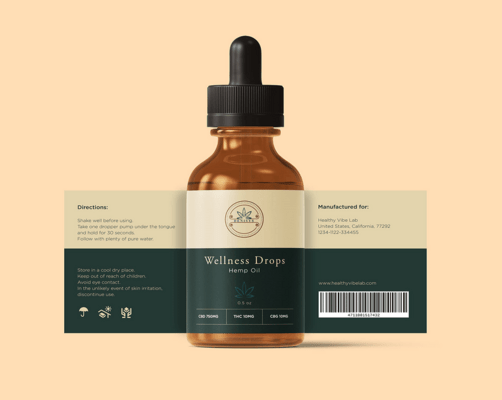
CBD Packaging / Labeling Requirements California | The Ultimate Guide

Are you facing certain difficulties with CBD product labeling and packaging? Well, of course! CBD is a worldwide growing market. If you're operating your business in California State and you stepped into the zone. Then our guide for labeling and packaging CBD products will aid you much.

Below are guidelines sourced from a notification proposed by California Cannabis Agencies dated Jan 16, 2019. If you're operating a licensed cannabis business, you must follow packaging and labeling regulations to deal with all CBD and CBD-infused products sold within California.

Packaging and labeling Recommendations By

California Cannabis Agencies

It would help if you considered labeling and packaging a CBD product beforehand, presenting it to your customer. The regulations put forward by the California Department of Public Health (CPDH). The updated notification holds labeling and packaging recommendations for Cannabis (flower rolls and pre-rolls) and Cannabis (extract) manufactured goods.

To help individuals further with compliance, the notification holds Master Packaging and Labeling FAQs; tap on the highlighted bar to review the relevant resources.

Also Read: Guide to Indiana CBD Packaging Requirements

General Guidelines for Packaging: CBD Packaging—Opaque Containers

All cannabis flowers, pre-rolls, and manufactured cannabis goods must be packed in compliance with the following requirements stated by the Medicinal and Adult-Use Cannabis Regulation and Safety Act (MAUCRSA):

  • There must be a tamper-evident seal:

A tamper-evident seal reveals whether the product's contents are initially touched or not; it's a plastic seal or sticker around the lid. In case the seal is not attached to the protective cover of the product, a consumer has visible evidence of its tampering.

  • The product packaging must bear a resealable property:

An ideal product packaging design holds a resealable feature (such as lids, adhesive closure, box top closures, etc.), recommended for products with multiple usages. This will ensure its safety from any external contamination through light, moisture, oxygen, etc.; further, it prevents the risk of child consumption.

  • Consider only opaque packaging for CBD-infused edible products:

It is difficult to see the inside contents of the product from an opaque package, unlike transparent. Opaque bottles, such as amber-colored ones, are preferred for beverages (e.g., syrups or energy boosters) and oral medicines (e.g. bottles for tablets). Such a type of packaging is designed to aid child resistance.

  • The Packaging Property Must Bear Child Resistance:

It means that the package design is challenging to open for children aged fewer than 5. Smoking dried hemp and Marijuana flower buds and relevant cannabis products can cause severe hazardous impacts on them; thus, it must bear a Child Resistant Packaging (CRP)

Child-resistant Packaging

What's more to know about CRP?

The package must say about the initial CRP if it is intended for single use. In contrast, the initial CRP tag generally implies flower and flower-only pre-rolls, inhaled concentrates (vape and cartridges), and single-serving cannabis products.

The product must hold a lifetime CRP statement if it facilitates multiple servings 'through a single product.'. It means the packaging is child-resistant as long as the product constituents end up. This tag is supported by edibles, consumed concentrates (tinctures and capsules, etc.), and suppositories.

The Packaging needs to get certified as 'Child Resistant' by relevant authorities (by PPPA act )

The container's closures or caps must seal with a pry-off crown technique.

Further, the packaging needs a four-mil thicker protective plastic covering and must be correctly heat sealed with no tab, dimple, or flap that discourages easy opening.

For every packaging, It should have

Packaging recommendations can be satisfied in any of the layers if the product holds a multi-layered packaging procedure.

Please make sure the products and their constituents are safeguarded from external toxic elements

It shouldn't have

Product packaging must not show any resemblance or identity to marketed children products

The packaging outlook must differ from those of non-cannabis food products.

Guidelines for labeling Cannabis (Flower and flower-only Only Pre-Rolls)

CBD Pre-Roll Packaging

All cannabis flower and flower-only pre-rolls must be labeled properly, and all the essential details regarding the product must fall under primary and informational panel categories.

Primary Panel:

The first thing that communicates with your regular and potential buyers is your brand identity, which is displayed through the primary panel at the front of your packaging. This is the part of the label that includes three key features.

The 'principal display panel' must patently display product identity:

It contains a short description of the product's common or usual name from which a person can easily distinguish the product type, for instance, flower or pre-rolls.

Net weight/net quantity of contents must be at the forefront of the packaging:

The net content measurements have to be displayed in metric (say grams) and U.S. customary units (say ounces), as guided by regulations.

The Universal Symbol of California must associate the PDP Panel:

The universal symbol of California indicates the country of origin on the cannabis commodities. This has to be mentioned in black and range at least 0.5* 0.5" by size. Tap here to upload the symbol!

Informational Panel:

When consumers desire more information, they ultimately review the informational panel. This part can state elsewhere on the product besides the PDP panel. It generally includes the following data.

It is mandatory to include the UID number on this label:

Receive your UID number from the California Cannabis Track-and-Trace system. Once you hold it, this requirement becomes necessary to get included. Moreover, it prohibits creating a placeholder UID number; instead of leaving a blank place, it is recommended unless you load your UID number.

Include the license name and contact details or website.

The legal business name or the registered DBA of the concerned licensee must be mentioned, along with the phone number or contact details. These worthy details on the informational panel added to your inner packaging of CBD products will let consumers easily communicate their concerns with the manufacturer or retailer.

Mention a caution or warning statement, if any:

Explicitly, if any statement is provided by the government that associates the product, say for medical cannabis products, highlight 'FOR MEDICAL USE ONLY.'. Also, bold and capitalized fonts are recommended.

Depending upon the applicability, a Prop 65 warning must state clearly if aware that its chemical composition can cause any serious harm on exposure to certain individuals, such as cancer, birth defects, or any reproductive harm.

The manufacturing date must be disclosed on the product's exterior:

The date on which the finished product is manufactured significantly impacts its shelf presence. Also, the manufacturing date must go by month, day, and year.

Cannabinoid Content of Ingredients Needs to be Declared on the Informational Panel:

For all CBD products, there must be a full declaration of ingredients. In contrast, the cannabinoid contents (such as concentration or amount of THC and CBD) present in the container are generally expressed in percentage.

For Every Label, It Shouldn't Have

Do not mention the country name of California unless all cannabis sources relate to inland cultivation.

Information imprinted about the product and its content prohibits misleading practices, for instance, labeling a product 'organic' while not certified.

The exterior labeling design must not include any cartoon or comic characters, kid's images, or words that interest minors.

Any health claims mustn't be included if they don't support the available criteria of peer-reviewed evidence.

It should have

The recommendation is to use English as a medium with an easily readable font, at least 6 points in size.

During labeling, individuals must be concerned about the layout of information in a clear and legit way.

All the essential labeling information must be visible and securely affixed at the exterior layer of packaging.

Adding an authentic piece of information other than recommended ones, unless it is not misleading, is permissible.

Guidelines for Labeling Cannabis Manufactured Products:

CBD-infused Products Range

Any authorized individual must verify these important recommendations included in their CBD-infused edible, cosmetic, and ailment-curing product labels.

Like earlier, these basic labeling requirements will be placed on the packaging's outer layer, which falls under two below-listed categories, based on the part of the packaging where it belongs.

Primary Display Panel:

All the information regarding product identity (for instance, edible gummies), net weight in g or oz. or fl. oz. and ml by volume, and universal symbol should typically be displayed at the front and top of the outer layer of packaging.

Informational Display Panel:

For the rest of the details apart from PDP, such as registered name and place of business, contact details or a QR code, ingredient declaration, warning or caution statements, and disclosure of material facts such as health claims, any other desired information will be listed on the information display panel.

Some Additional Labeling Details Regarding Manufactured Cannabis Products:

There might be two key concerns regarding it.

If Your Product Holds Multiple Packaging Layers,

The basic PDP need, apart from mentioning it to the other layers, is mandatory to infuse on the inner container, which is in direct physical contact with the product.

Any inhaled cannabis product layout (such as cartridges, vapes, shatter, or wax) must exhibit the universal symbol, whereas for non-inhaled cannabis products (such as edibles, tinctures, topical, etc.), the word Cannabis-infused must be included along with product identity, a universal symbol, and net weight or volume details.

If your product packaging holds too little space to get all the required information on the outer layer.

Suppose your tincture bottle is too small to fit in all the required details; to fix this for the leftover information to present, use a leaflet, hangtag, peel-back labels, and inserts. It is important to note that Q.R. codes, websites, and other methods are not part of supplemental labeling; they serve as sources of contact to deal with product complaints and inquiries.

For every Label, It should have

Make sure you display all the information in a readable format with clear and legit wordings using English as a medium language along with a 6-point font size or more.

Confirm all suggested labeling requirements displayed on Packaging's outer layer, whereas an insufficient package space could be supplemented by hangtags and inserts, etc.

It Shouldn't have

All its constituents should be sourced by the country, and then it can state California as the product's place of origin.

Any inappropriate and unauthorized statement about products, such as false health claims, is an act of violation of the labeling requirements. This could even lead you to federal prosecution.

You must confirm that each of your edible cannabis products does not hold any sort of picture; rather, it comes in an opaque covering. This initiative is an attempt by the state to reduce the risk of children's attraction towards the product.

There goes a label restriction that you cannot market your product as an alcoholic beverage, as notified by the Bureau of Cannabis Control regulations.