
Why Lab-Tested THC Vape Products Matter More Than Ever

Choosing a THC vape product used to come down to flavor, price, and maybe a brand name you recognized from a friend’s recommendation. That is no longer enough. As the hemp-derived market has grown, consumers have gotten sharper about asking what is actually inside a cartridge and how anyone can verify it before it ever reaches a mouthpiece. That shift shows up clearly in North Carolina, where a mix of physical storefronts and online retailers means buyers increasingly compare not just price and strain names, but which sellers can actually back up their claims with real testing.

Lab testing has become one of the clearest signals separating a serious operation from one hoping nobody checks. No test eliminates every risk, but independent laboratory analysis gives a buyer something a label alone never can: verifiable information about what a product actually contains.

Why Third-Party Testing Is Different From a Label Claim

A label is written by the company selling the product. A Certificate of Analysis is written by an independent lab that has no financial stake in the outcome, testing a specific batch for cannabinoid content and, where required, screening for contaminants that would never show up in marketing copy. That distinction is the entire point. A brand can print any number it wants on packaging. An independent lab either confirms that number or it does not.

Because cannabis and hemp-derived products vary somewhat from batch to batch depending on the plant material and extraction run, ongoing testing is what actually lets a manufacturer verify that quality holds steady over time, rather than assuming it does.

A THC Percentage Is Not the Whole Story

Most buyers look first at the THC number on the package, understandably, since potency is the most immediately relevant figure. But potency is only one piece of what a genuinely thorough test actually measures.

A full-panel lab result should also screen for residual solvents left over from extraction, heavy metals, pesticides, and microbial contamination, none of which show up anywhere on a product’s front label. The FDA has directly documented why this matters: its own running list of warning letters issued to cannabis-derived product companies, including several firms based right here in North Carolina, shows a long, ongoing pattern of products making claims that did not hold up to independent scrutiny. Looking past the THC percentage on the front of a package is exactly what catches the kind of gap that list keeps documenting.

Transparency Is What Separates Trust From Marketing

The clearest sign of a trustworthy seller is whether they let you check their work. A company willing to publish batch-specific lab results, rather than making customers request them or simply promise they exist, is showing you something a slogan cannot fake.

Shoppers looking into THC vape carts increasingly treat this as a baseline expectation rather than a bonus feature, checking whether test results are actually linked from the product page itself before ever adding something to a cart.

The Hemp Doctor publishes public lab results directly on its site for every vape product it sells, giving customers a batch-specific COA to review before checkout rather than a promise to send one later if asked.

Consistency Is What Keeps You Coming Back

Anyone who finds a product they like usually wants that same experience the next time they buy it. Batch testing and consistent manufacturing are what actually make that expectation realistic, verifying that a new batch falls within the same specifications as the one before it.

Without that kind of ongoing quality control, noticeable drift between batches becomes far more likely, and a product that worked well once can quietly become unpredictable without any change to the label at all.

A Maturing Market Is Raising the Bar

The hemp-derived cannabis market continues to evolve, with consumers placing greater value on transparency, consistent quality, and product testing than ever before. While testing and labeling requirements still vary between states, many manufacturers are choosing to exceed minimum regulatory standards by investing in stronger quality assurance practices.

That proactive approach not only helps build consumer trust today but also positions businesses to adapt more easily as regulations continue to develop. In a rapidly changing industry, companies that prioritize transparency and product quality are often better prepared for long-term success.

Questions Worth Asking Before You Buy

A few direct questions can save a lot of guesswork before a purchase:

  • Does the seller publish independent lab results, or only mention that testing exists?
  • Are the results specific to the actual batch you are buying, not a generic or outdated sample?
  • Does the COA cover more than potency, including contaminant screening?
  • Is this information easy to find, or buried several clicks deep?

Taking a few extra minutes to review this information can help consumers make more informed purchasing decisions.

Final Thoughts

Lab-tested THC vape products matter now more than at any point in the market’s short history, not because testing itself is new, but because consumers finally have the means and the motivation to actually check.

A Certificate of Analysis is not a marketing flourish. It is the one piece of documentation that tells you, in specific and verifiable terms, what you are actually inhaling. As the market keeps maturing, choosing sellers who make that information easy to find, rather than hard to track down, remains one of the simplest and most effective ways to buy with real confidence.
Why Northern Lights Remains a Benchmark in Cannabis Genetics

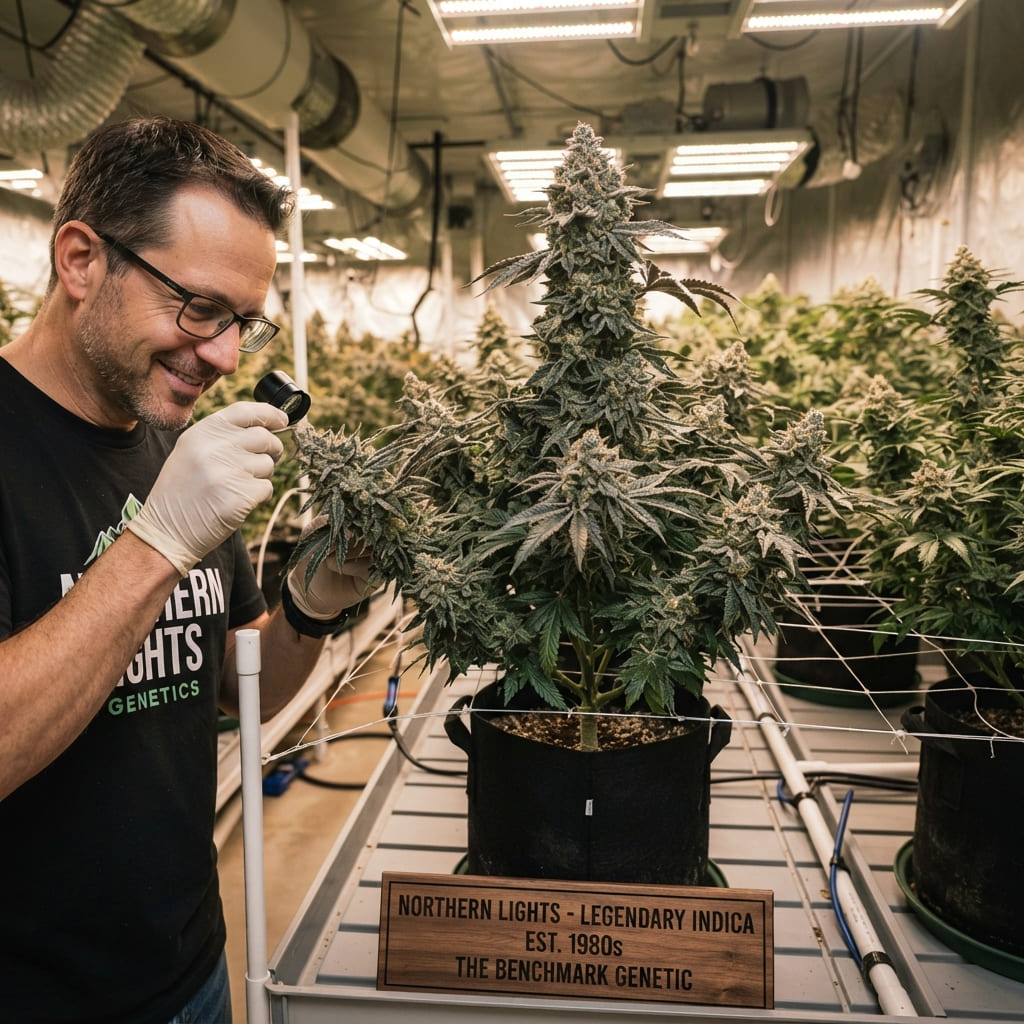
Why does a cannabis strain introduced more than forty years ago still serve as the benchmark for modern indicas? Picture the breeding world in 1985: no internet, no global seed banks, and no easy way to verify a strain’s lineage beyond trusting the person who handed you a handful of seeds or a clone. Into that landscape arrived Northern Lights, a cultivar that would go on to define what growers expected from an indica long before terms like “benchmark genetics” became common.

Four decades later, its influence remains remarkably strong. Breeders still compare new releases to Northern Lights, describing them as stronger, faster, or more terpene-rich versions of the classic rather than treating them as entirely separate creations. That enduring reputation is no accident. It reflects a strain whose stability, consistency, and breeding history have made it one of the most influential foundations in modern cannabis genetics.

An Origin Story That Actually Holds Up to Scrutiny

Northern Lights emerged from underground breeders in the Seattle area during the late 1970s as a cross between an Afghani indica and a Thai sativa landrace. The cross showed promise, but its lasting reputation came from what happened next. Australian-born breeder Nevil Schoenmakers took the genetics to the Netherlands, where he evaluated eleven different phenotypes before selecting NL#5 as the most stable and consistent expression.

That careful selection helped Northern Lights stand out from many other hybrids of the era. Its reputation continued to grow after winning 1st Place at the 1989 High Times Cannabis Cup, followed by additional awards in the early 1990s, establishing it as one of the most influential strains in modern cannabis breeding.

Why Genetic Stability Is a Real, Documented Problem in Cannabis

Northern Lights’ defining trait is not its potency or its terpene profile. It is stability, the fact that a seed pack from this lineage reliably produces the same plant, generation after generation, rather than the phenotype lottery common with modern hybrids.

That instability is not just an old-school complaint from growers nostalgic for “the classics.” A peer-reviewed genomic study published in PLOS ONE directly addressed this problem, noting that decades of large-scale, unrecorded hybridization across North America have made vernacular strain naming “unreliable and inadequate” for identifying or selecting cannabis genetics with any real precision.

The researchers found that genetic differences between modern commercial strains exist at a whole-genome level, not confined to a handful of cannabinoid genes, meaning two products carrying the same strain name can differ substantially in their actual genetic makeup.

That finding reframes why a strain like Northern Lights matters so much. In a market where a name alone increasingly tells you very little about what you are actually growing, genetics with a documented, traceable lineage and decades of consistent phenotype expression become genuinely valuable rather than merely nostalgic.

What Actually Makes Northern Lights a Benchmark

Strip away the nostalgia, and three specific things explain why this particular strain, and not the hundreds of other Afghani-Thai crosses attempted around the same era, became the industry’s measuring stick.

  • A documented, verifiable lineage. Unlike most genetics from the era, Northern Lights’ Afghani × Thai cross and its selection into the NL#5 phenotype by Nevil Schoenmakers is a matter of recorded history, not folklore pieced together after the fact.
  • A selection process built for consistency, not novelty. Schoenmakers ran eleven phenotypes before settling on one, meaning the strain’s stability was engineered deliberately rather than being a lucky accident that happened to breed true.
  • A track record independently verified through competition. The 1989 High Times Cannabis Cup win, followed by multiple additional wins through the early 1990s, gave the strain a form of third-party validation most genetics from that period never received.

Together, these three factors are what let growers use “Northern Lights” as a genuine unit of comparison rather than just a nostalgic name, since the strain’s identity is anchored in verifiable history rather than reputation alone.

Understanding a Seed Bank’s Role in Preserving That History

Genetics this old only remain accessible if a seed bank actually maintains the lineage rather than letting the name drift across unrelated crosses over time, which is a genuine risk given how loosely strain names get reused. Understanding Northern Lights cannabis seeds in this context means understanding that not every pack sold under this name traces back to the same genetic root Schoenmakers actually stabilized.

Sacred Seeds, as an Australian seed bank, addresses this directly by documenting the Afghani × Thai lineage and NL#5 heritage behind its own Northern Lights catalogue entry, rather than relying on the name alone to carry the weight of the strain’s reputation.

What Made the #5 Phenotype the One Growers Kept Coming Back To

Schoenmakers did not simply cross two landraces and call it done. Running eleven phenotypes before settling on one reflects a deliberate selection process aimed at consistency, not just desirable traits in a single standout plant. The #5 phenotype delivered a compact, fast-flowering structure, roughly 7 to 9 weeks compared to the 12 to 16 weeks typical of long-flowering sativas at the time, which made indoor cultivation under artificial lighting commercially practical for the first time.

Heavy resin production from the Afghani parent, moderated by just enough Thai sativa influence to prevent total sedation, produced an effect profile distinct enough that growers could recognize it blind. Decades on, that same combination of speed, structure, and predictability is exactly what still draws new growers to the strain, particularly those running their first photoperiod grow.

Final Thoughts

Northern Lights earned its place as a benchmark through a specific, documented process: a promising cross, careful selection down to one stable phenotype, and decades of consistent performance that many modern hybrids, bred and renamed at a much faster pace, often cannot match.

That long history of stability is exactly what continues to make the strain relevant today, offering growers a level of predictability that is difficult to achieve through name recognition alone. For those seeking genetics with a proven track record, Northern Lights remains one of the clearest examples of what a deliberately stabilized lineage can deliver, even decades after it first gained worldwide recognition.

Why Permanent Marker Seed Genetics Matter in Modern Breeding Programs

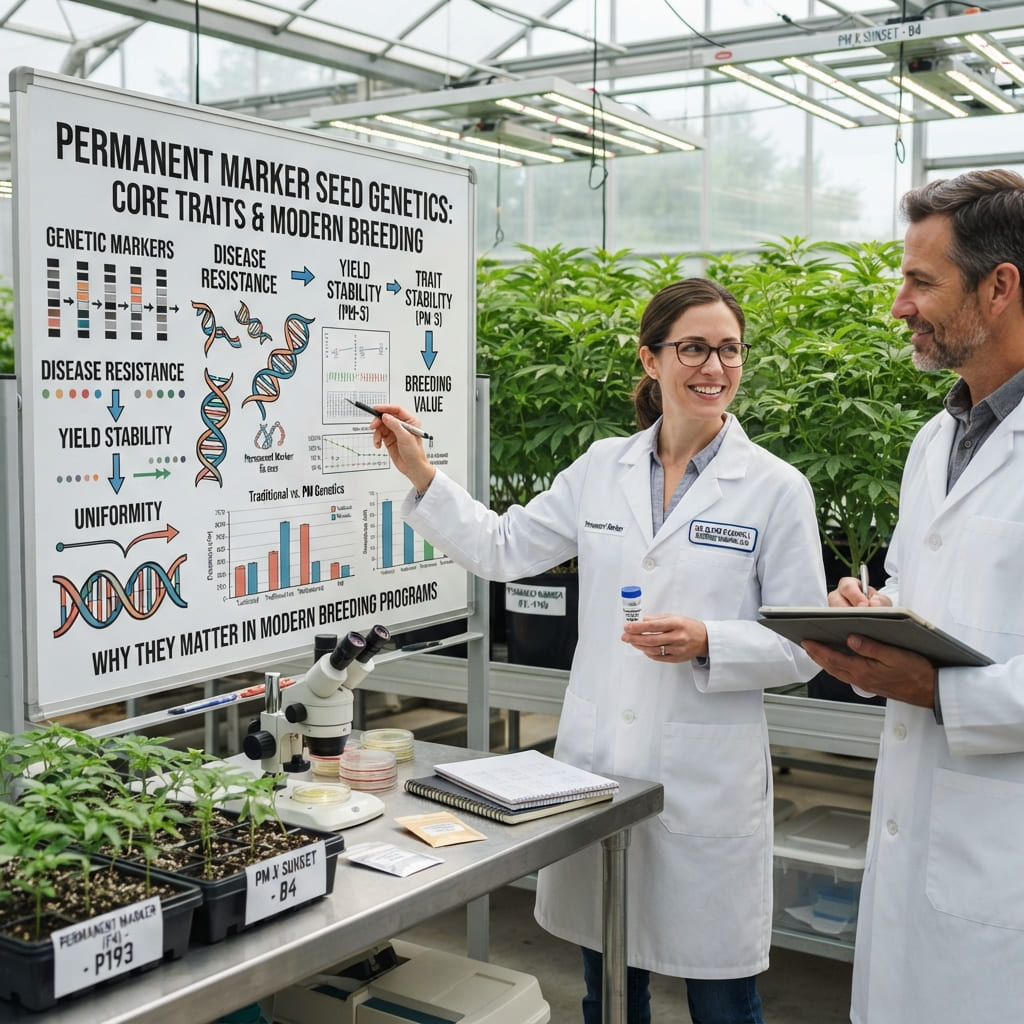
What actually separates a strain that fades into the background from one that reshapes an entire catalogue? It usually comes down to genetics, not luck. Every so often a cross comes along with a chemical profile so distinct that breeders spend years building on it. Permanent Marker is one of those genetics, and understanding why it matters says a lot about how modern breeding programs actually work.

If you have spent any time following cannabis genetics, you have probably noticed how quickly certain strains become reference points for entirely new crosses. Permanent Marker is a clear example of that pattern in action.

The Lineage That Makes Permanent Marker Stand Out

Permanent Marker comes from a three way cross: Biscotti and Jealousy were combined first, then that offspring was crossed into Sherb Bx1. Each parent contributes something specific to the final result, which is part of what makes this genetic combination so valuable to breeders.

Here is how the lineage breaks down:

  • Biscotti contributes dense structure and a sweet, doughy base
  • Jealousy adds gassy complexity and dessert like depth
  • Sherb Bx1 tightens the structure and pulls out a distinctive floral note

Combining stable, well documented parent lines like these is a deliberate strategy, not a random pairing. Breeders choose parent genetics specifically because their traits are predictable enough to combine with purpose.

Why Terpene Expression Matters So Much in Breeding

Terpenes are not just responsible for aroma. They are also a window into how a plant’s genetics are expressing themselves, which makes them one of the most useful tools breeders have when evaluating a cross.

Permanent Marker is known for a floral, almost solvent like top note driven by linalool, layered over a candy and gas base from its Cookies family heritage. That kind of distinct, recognizable terpene signature is exactly what breeders look for when deciding whether a genetic line is worth building on further.

A 2021 study published in Nature Plants used genetic sequencing across cannabis samples to identify specific genes and markers linked to terpene and cannabinoid expression, showing that these chemical differences are rooted in measurable genetic variation rather than random chance. Findings like this help explain why certain genetic lines consistently produce standout phenotypes while others do not.

How Award Winning Genetics Influence Future Crosses

When a strain earns recognition the way Permanent Marker has, it tends to attract serious attention from breeders looking to build their next generation of crosses. A genetic line that wins back to back awards is proving something more than popularity. It is demonstrating consistency across different growing environments and grower expectations.

This is where Permanent Marker genetics become especially relevant for anyone exploring where to source reliable seed stock. Many growers rely on an established seed bank to access verified genetics like this, since sourcing directly from a trusted supplier reduces the guesswork involved in starting a breeding project.

Sigma Seeds is one seed bank that stocks Permanent Marker seeds alongside detailed lineage and grow information, which matters when growers want confidence in what they are actually planting.

Phenotype Variation and Why It Matters

Even within a single, well bred pack of seeds, phenotype variation is normal and expected. Permanent Marker shows a noticeable range depending on which parent’s traits express more strongly in a given plant.

Growers evaluating a pack typically watch for these patterns:

  • Biscotti leaning phenotypes with denser bud structure and stronger cookie dough character
  • Jealousy leaning phenotypes with more color and gassier, dessert forward notes
  • Balanced phenotypes sitting between both parent directions, often considered the most desirable

Understanding this variation is part of what makes breeding programs valuable in the first place. A stable genetic line does not produce identical plants. It produces a predictable range of outcomes that breeders can select from with confidence.

The Role of Patience in Evaluating Genetics

One of the most overlooked aspects of working with complex genetics like Permanent Marker is timing. Many of its defining characteristics, especially the signature terpene profile, develop late in the flowering cycle and continue to build through an extended cure period.

This matters for breeding programs because early evaluation can lead to discarding genuinely strong plants simply because their best traits have not fully expressed yet. Patience during evaluation is often what separates breeders who identify true standout phenotypes from those who miss them entirely.

What This Means for the Future of Breeding Programs

Genetics like Permanent Marker do more than produce a single memorable strain. They become foundational tools that shape future breeding decisions for years afterward. Once a genetic line proves it can consistently deliver a distinct profile, breeders begin using it as a building block for new combinations, extending its influence far beyond the original cross.

This cycle is part of why certain genetics maintain relevance long after their initial release. Their traits keep showing up in new crosses, carried forward by breeders chasing that same reliability and distinct character.

Final Thoughts

Understanding genetics like Permanent Marker provides valuable insight into how modern cannabis breeding has evolved. Rather than simply following what’s popular, it helps illustrate how carefully selected parent genetics can produce consistent traits, distinctive terpene profiles, and reliable performance across generations. It also highlights why phenotype variation is a normal part of the selection process and why experienced breeders take the time to evaluate plants thoroughly before drawing conclusions.

Whether you’re exploring cannabis genetics out of personal interest or researching potential breeding stock, learning what makes Permanent Marker stand out offers a deeper appreciation for the careful planning and selection behind today’s most influential cultivars.