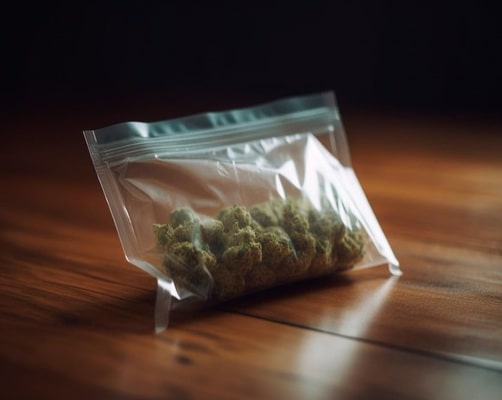
Are Weed Bags Able To Keep Weed While Travelling?

A Complete Guide to Cannabis Storage & Travel Safety

Travelling with cannabis requires careful planning from choosing the right weed bag to understanding local laws. This guide covers everything you need to know to make informed, safe decisions on the road.

In recent years, cannabis legalization has expanded across multiple regions, giving consumers more freedom than ever before. However, this shift has also created a patchwork of complex, often conflicting laws that travellers must navigate carefully. One of the most common questions asked by cannabis consumers is: are weed bags actually effective at keeping weed fresh and discreet while travelling?

The short answer is yes  but only if you choose the right type of bag and pair it with a solid understanding of the legal landscape wherever you're headed. Other cannabis-derived products like hemp oil and CBD-infused items are legal in the majority of countries, but the same cannot be said about weed, which remains restricted or fully illegal in many parts of the world.

Important Disclaimer: Even the best weed bag cannot protect you legally if you are caught in a region where cannabis possession is illegal. Always research and comply with local laws before travelling with cannabis. Penalties can include deportation, heavy fines, and imprisonment.

Understanding Cannabis Legality While Travelling

Before discussing the topic of weed bags for travelling, it's essential to understand the legal landscape. Weed is still classified as an illegal substance in the majority of countries worldwide, and what is perfectly legal in one region can carry serious criminal penalties in another.

Before you plan any trip across a border or state line with cannabis, invest time in researching the laws and regulations of your destination. Ignorance of the law is not a valid legal defense, and the consequences, including deportation, jail time, and financial penalties can be severe and life-altering.

Key Legal Differences to Be Aware Of

  • Some US states have fully legalized recreational cannabis, while others treat possession as a criminal offense
  • In Canada, cannabis is federally legal, but crossing into the US with it remains a federal crime
  • Most European countries still classify cannabis as a controlled substance with varying penalty levels
  • In several Asian and Middle Eastern countries, cannabis possession carries extremely harsh penalties including lengthy imprisonment
  • Medical cannabis rules differ widely  a valid prescription in your home country may not be recognized elsewhere

A quick Google search or consultation with a travel attorney in your destination country can save you from potentially life-changing legal trouble. This small investment of time is absolutely worth it.

Types of Weed Bags

For those travelling in regions where cannabis is legally permitted, investing in high-quality weed bags is strongly recommended. These bags are specifically engineered to preserve the quality, freshness, aroma containment, and discreetness of cannabis products during transit. Here's a detailed breakdown of the main types available:

Smell-Proof Bags

No matter how discreet your packaging looks on the outside, if it cannot contain the distinctive aroma of cannabis, your cover is immediately blown. Smell-proof bags use activated carbon lining and airtight seals to completely neutralize odors, preventing detection in public spaces, vehicles, and during baggage checks.

Best for: Discreet Travel

Vacuum-Sealed Bags

Vacuum-sealed weed packaging removes all air from the bag before sealing, creating a completely odorless and oxygen-free environment. This not only prevents smell from escaping but also significantly extends product freshness by eliminating oxidation. Ideal for longer trips where you need your product to stay at peak quality.

Best for: Long Trips

Mylar Bags

Widely considered the gold standard in cannabis storage, Mylar bags are crafted from a durable biaxially-oriented polyethylene terephthalate film. They offer multi-layer protection against light exposure, moisture, oxygen, and odors  all major factors that degrade cannabis quality. Their metallic interior also provides UV protection, which is critical for preserving cannabinoid potency.

Best for: Premium Storage

Child-Proof Bags

Child-resistant weed bags are engineered with special locking mechanisms that make it near-impossible for young children to open. This is not only a moral responsibility  it is a legal requirement in many states and countries that have legalized cannabis. These bags are especially important while travelling and storing products in mixed luggage around family members.

Best for: Family Travel

Tamper-Proof Bags

Tamper-evident bags feature built-in security indicators such as void seals, tear notches, and adhesive strips  that clearly show if a bag has been opened or interfered with during transport. These are especially valuable when your luggage is checked in or handled by third parties, ensuring the integrity of your cannabis remains verifiable upon arrival.

Best for: Checked Luggage

Resealable Zipper Bags

For everyday travel and convenience, resealable zipper pouches made with airtight double-lock seals provide practical, reusable storage. While they may not offer the same level of odor control as Mylar or vacuum-sealed options, they are lightweight, portable, and effective for short trips where premium preservation is less critical.

Best for: Short Trips

Remember: Even the most advanced weed bag is a storage tool  not a legal shield. In regions where possession of cannabis is illegal, no amount of discreet packaging will protect you from serious legal consequences if you are caught.

Key Factors to Consider When Travelling With Cannabis

Even after investing in top-quality weed bags and packaging, there are several critical factors every cannabis traveller should carefully consider before and during their journey:

1) Destination Legality

Thoroughly research the cannabis laws of your destination before departure. Some states and countries have legalized possession but impose strict rules around how much you can carry, the legal age for possession, and where consumption is permitted. Never rely on assumptions laws change frequently and vary dramatically even between neighboring regions.

2) Mode of Transportation

Different transport methods carry vastly different risks and regulations. Air travel is by far the most strictly regulated the TSA and international customs authorities treat cannabis as a federal controlled substance regardless of state law. Road travel through legal states is generally more straightforward, but crossing state lines  even between two legal states  can constitute a federal offense. Public transportation rules vary by city and country.

3) Quantity Limits

Legal jurisdictions that permit cannabis possession almost always impose strict quantity limits. These limits differ significantly from one state or country to another what is a legal amount in Colorado may be considered distribution-level possession in another state. Always verify the specific gram limits for both residents and visitors in your destination and stick well within those limits.

4) Medical Documentation

If you are traveling with medical cannabis, always carry your complete documentation, including your prescription, physician's letter, and official medical cannabis card. While this documentation can provide legal protection in many regions, it is not universally recognized across all jurisdictions. Research whether your medical authorization is accepted at your destination before you travel.

5) Storage Temperature & Conditions

Beyond legal considerations, proper storage conditions are essential for maintaining cannabis quality during travel. Exposure to heat, humidity, and direct sunlight can rapidly degrade cannabinoids and terpenes. Keep your weed bags stored in a cool, dark place ideally between 60–70°F (15–21°C), and away from electronics or items that generate heat in your luggage.

6) Packaging Compliance

Many legal cannabis markets mandate specific packaging requirements, including child-resistant closures, tamper-evident seals, and proper labeling with THC content and batch numbers. Ensure your packaging complies with both your origin and destination regulations to avoid complications with authorities during travel.

Pro Tips for Travelling With Cannabis

  • Always purchase cannabis from licensed dispensaries and keep your receipt; it confirms legal acquisition
  • Never pack cannabis in carry-on luggage for air travel, even in regions where it is legal
  • Use double-layer storage: a Mylar bag inside a smell-proof outer bag for maximum discretion
  • Keep cannabis in its original, labeled dispensary packaging whenever possible
  • Store your medical documentation in a separate, easily accessible part of your bag
  • When in doubt, purchase cannabis at your destination from a licensed local dispensary instead of travelling with it
  • Never share or give cannabis to others in public this can be treated as distribution in many jurisdictions

Frequently Asked Questions

Can smell-proof bags really fool drug-detection dogs? 

While smell-proof bags significantly reduce odor emissions and can fool human noses, trained drug-detection dogs are highly sensitive and can often detect cannabis even through specialized bags. Never rely on smell-proof packaging as a strategy to avoid detection by law enforcement.

How Long Can Mylar Bags Keep Cannabis Fresh? 

When properly sealed and stored in optimal conditions (cool, dark, low humidity), Mylar bags can preserve cannabis quality for 6 months to over a year. Vacuum-sealed Mylar bags stored in a cool location can extend freshness even further.

Is it Legal to Fly Domestically With Cannabis in Legal US States? 

Despite state-level legalization, cannabis remains a Schedule I controlled substance under US federal law. Airports and flights operate under federal jurisdiction, meaning TSA agents are required to report cannabis to local law enforcement if discovered. Flying with cannabis is generally not recommended, even between two legal states.

What is the Best Weed Bag for Air Travel? 

Legally speaking, the safest choice for air travel is to not carry cannabis at all and purchase it at your destination if it is legal there. If you are traveling in a region with legal cannabis and must carry a small amount, a vacuum-sealed Mylar bag inside a smell-proof outer pouch offers the best preservation and discretion, but this does not provide legal protection.

Do I Need Child-Proof Packaging for Cannabis in All Legal States? 

Yes, in the majority of US states and Canadian provinces where cannabis is legal, child-resistant packaging is a mandatory legal requirement for both retailers and consumers. Always ensure your storage packaging meets local compliance standards to avoid fines.

Conclusion

Weed bags are genuinely effective tools for preserving the freshness, potency, and discretion of cannabis products during travel  but they are only one piece of a much larger puzzle. The most important step any cannabis traveler can take is to thoroughly understand and respect the laws of every jurisdiction they will be passing through.

Whether you choose smell-proof bags for daily discretion, durable Mylar bags for long-term preservation, or child-resistant pouches for family-safe storage, always pair your packaging choice with proper legal knowledge, responsible consumption, and respect for local regulations.

The cannabis industry is evolving rapidly, and with proper preparation, responsible travelers can enjoy their products safely and legally. When in doubt, the safest strategy is to always purchase cannabis locally at your destination from a licensed dispensary eliminating the need to travel with it entirely.

Looking for Premium Cannabis Packaging?

Explore our full range of high-quality, compliant weed bags and cannabis packaging solutions designed to keep your products fresh, discreet, and legally compliant.

Explore Our Packaging

How Much Nicotine Is In A Vape And What Those Numbers Actually Mean

If you ever stood in front of a vape shop display you saw numbers like 20mg or 3% written on every box. Most people pick one randomly without understanding what it actually means. How much nicotine is in a vape anyway? 

Choosing wrong nicotine strength can make your first experience terrible. Too strong and you cough your lungs out. Too weak and you feel nothing at all. Let me explain everything about vape nicotine levels in simple words today. 

What Those Nicotine Numbers Actually Mean 

First thing you need to understand is how people measure nicotine content in vape. You will see two types of numbers written on packaging. One is milligrams usually written as mg. The other is percentage sign. Both tell exactly same thing just in different way. 

1% nicotine means there is 10mg of nicotine in every milliliter of vape juice. So 2% equals 20mg and 5% equals 50mg. How much nicotine is in a vape depends entirely on this number. The bottle or device size does not change how strong each puff feels. A small 1ml vape with 20mg feels same strength as big 10ml bottle with 20mg nicotine. 

Common Nicotine Strengths You Will Find 

Vapes come in few standard nicotine strength in vapes that almost all brands use. Each level works for different type of user. 

Zero Nicotine Vapes 

Zero nicotine means exactly what it says. No nicotine at all inside. These are for people who like vaping habit but do not want nicotine anymore. Many long term vapers slowly lower their strength until they reach zero. 

Low nicotine levels 

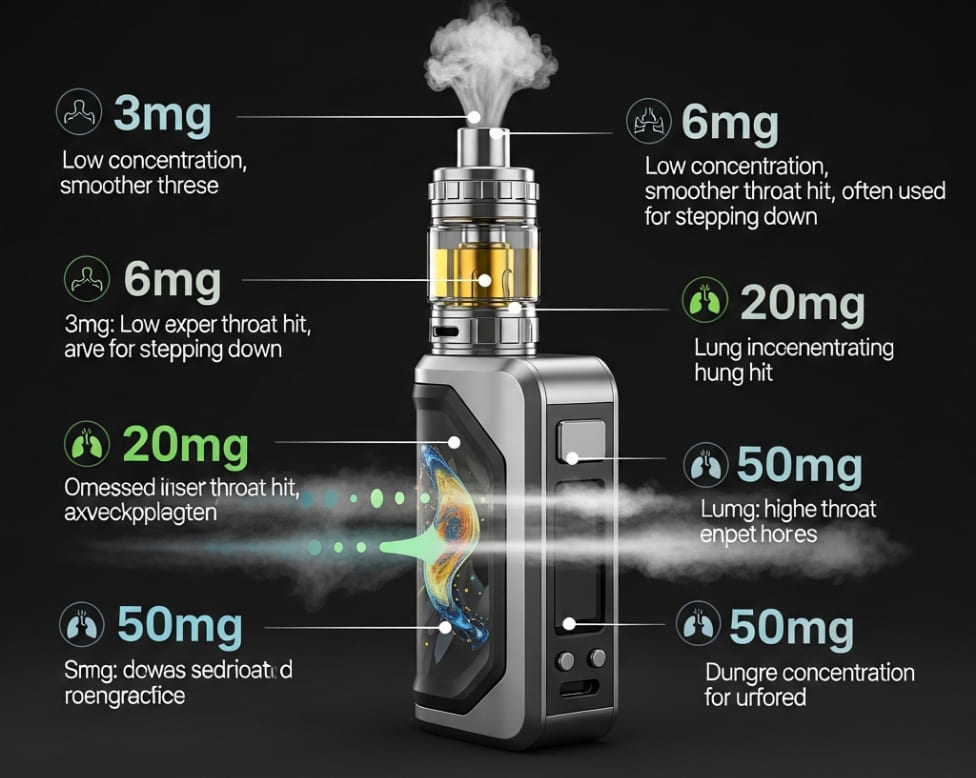
Low strength ranges from 3mg to 6mg or 0.3% to 0.6%. This is very mild strength. Good for people who vape casually or used to smoke very light cigarettes. One puff gives very small hit of nicotine you barely notice. 

Medium nicotine levels 

Medium strength is 10mg to 12mg or 1% to 1.2%. This is most popular strength for people who used to smoke regular cigarettes. It gives enough nicotine to satisfy craving without feeling too harsh in throat. 

High nicotine levels 

High strength starts from 18mg up to 50mg or 1.8% to 5%. Almost all disposable vapes you see today come in 20mg or 50mg strength. This is very strong. New vapers should never start with this strength. 

How Strong Is Vape Nicotine Compared To Cigarettes 

Most people want vape nicotine comparison to regular cigarette. This is tricky but I will try explain simply. One average cigarette has about 10mg to 12mg of nicotine inside. But you only absorb around 1mg of that nicotine when you smoke whole cigarette. 

Vape nicotine works differently. A 20mg disposable vape has total nicotine equal to about 20 cigarettes. Most people say one 20mg disposable lasts them same as one pack of cigarettes. 10mg vape strength feels similar to light cigarette. 20mg feels similar to regular full strength cigarette. 50mg feels much stronger than any cigarette you can buy. Remember this when choosing your first vape. 

Nicotine In Disposable Vapes vs Refillable Vapes 

There is big difference between nicotine in disposable vapes and nicotine in refillable vape juice. Almost all disposable vapes use something called salt nicotine. This type of nicotine hits fast and feels smooth even at high strengths. This is why you see 50mg disposable vapes that do not burn your throat. 

Refillable vapes usually use freebase nicotine. This type feels much harsher at same strength. 20mg freebase nicotine feels way stronger than 20mg salt nicotine. How much nicotine is in a vape feels very different depending on what type of nicotine it uses. 

All this information must be printed clearly on custom vape boxes by law. Good custom disposable vape boxes always shows both mg and percentage numbers clearly on front of box. We also see many new brands adding small explanation on custom vape cartridge packaging to help new users understand strength levels better. 

How To Choose Right Nicotine Strength For You 

Picking right nicotine strength is most important thing when buying vape. If you just quit smoking one pack a day start with 20mg salt nicotine. This will satisfy your craving perfectly. If you smoked less than half pack a day 10mg or 12mg is probably enough for you. If you only smoke occasionally on weekends 6mg will work fine. Never start with 50mg if you are new. That strength is only for very heavy smokers who smoked two or more packs per day. Starting too strong will make you feel dizzy and sick and you will hate vaping completely. You can find many vape nicotine charts online, but this simple rule works for almost everyone. Start a little lower than you think you need. You can always go higher but starting too strong will ruin the whole experience.

Protective packaging plays a major role in keeping glass beaker bongs safe before they reach the customer. Since glass accessories are fragile, brands usually use thick cardboard boxes with internal padding or molded inserts to hold the item firmly in place. This prevents movement inside the box and reduces the risk of cracks or chips during delivery. Many companies also choose printed packaging that clearly displays product information and branding while maintaining a clean retail look. Durable cbd boxes packaging can include layered protection, strong outer material, and custom inserts so the product stays secure from warehouse storage to the final customer's doorstep.

Conclusion 

So now you understand how much nicotine is in a vape and what all those numbers actually mean. Remember 1% equals 10mg per ml. 20mg is most common strength that works for most ex smokers. Salt nicotine feels much smoother than freebase nicotine at same strength. Always check nicotine number before buying any vape. Choosing right strength makes whole difference between good experience and bad one. Next time you stand in front of vape display you will know exactly what you are picking and you will not have to guess anymore. 

Exploring the Best Tobacco Blends for Quality Cigarettes

Want to find quality cigarettes that actually deliver a satisfying experience?

Most people just grab whatever's cheapest. Big mistake.

With cigarette sales declining 27% between 2015 and 2021, smokers are getting pickier. They want quality, not quantity.

Here's the problem:

Most people have no clue what makes one cigarette better than another. They think all tobacco is the same.

Wrong.

The secret? Understanding tobacco blends. It's the difference between a satisfying smoke and complete disappointment.

What you'll discover:

  • Understanding Tobacco Blend Basics
  • The Three Main Tobacco Types That Matter
  • How To Identify Premium Blends
  • Finding Your Perfect Cigarette Match

Understanding Tobacco Blend Basics

Here's what most people don't realize…

The tobacco blend is everything. It controls the flavor, the strength, how it burns, and whether it tastes good or terrible.

Think about coffee for a second. You wouldn't mix random beans together and expect greatness, right? Same deal with tobacco.

When you're searching for cigarettes near me, you need to know what you're actually buying. Quality cigarettes use specific tobacco varieties mixed in exact proportions.

Here's the thing:

Master blenders spend years learning how different tobaccos work together. They know which combinations create smoothness. Which ones add complexity, and which ones deliver satisfaction.

But here's the kicker…

Most cigarette companies don't tell you their blend composition. You have to know what to look for.

The Three Main Tobacco Types That Matter

Every quality cigarette uses some combination of three main tobacco types.

Understanding these will change how you buy cigarettes forever.

Virginia Tobacco: The Sweet Foundation

Virginia tobacco is the backbone of premium cigarettes.

This golden-yellow stuff is flue-cured. That means it's dried with controlled heat.

Here's why Virginia tobacco matters:

Virginia leaves are packed with natural sugars. During curing, these sugars caramelize. That creates the sweet, smooth flavor that makes cigarettes enjoyable.

Without Virginia tobacco? Most cigarettes would taste harsh and bitter.

In typical American blends, Virginia makes up around 70% of the total blend. That's huge. Shows you how important this stuff is.

Virginia also burns evenly. No going out halfway through. No bitter puffs that ruin everything.

Burley Tobacco: The Body Builder

Burley is completely different from Virginia.

It's air-cured instead of flue-cured. Changes everything about how it tastes and smokes.

Here's what makes Burley special:

Air-curing removes most natural sugars. What's left? Tobacco that's rich in nicotine and flavor compounds.

Burley adds body and strength to blends.

In premium American blends, Burley makes up 20-30% of the mixture. This proportion is critical.

Too much Burley? Cigarettes become too strong and harsh.

Too little? They're weak and unsatisfying.

Burley also absorbs flavors really well. That's why it's essential for consistent, flavorful cigarettes.

Oriental Tobacco: The Complexity Creator

Oriental tobacco might be the smallest part of most blends…

But it's often the most important for creating character.

These small-leafed tobaccos grow in Turkey and surrounding regions. They're sun-cured, which develops unique aromatic compounds you can't find anywhere else.

Here's what Oriental tobacco does:

It adds complexity and sophistication to blends. Even though Oriental typically makes up only 5-10% of American blends, it's what separates premium cigarettes from basic ones.

The best Oriental tobaccos have a dusty, slightly spicy aroma. This balances the sweetness of Virginia and the strength of Burley.

Without Oriental tobacco? Most cigarettes would be one-dimensional and boring.

How To Identify Premium Blends

Now that you understand the basics…

Here's how to spot cigarettes with superior tobacco blends.

Look for Balance, Not Extremes

Premium cigarettes achieve balance.

They don't try to be the strongest. Or the mildest. They aim for harmony between sweetness, strength, and complexity.

Red flags to avoid:

  • Cigarettes that advertise extreme strength
  • Brands focused only on low tar or nicotine numbers
  • Products that rely heavily on artificial flavoring

Quality tobacco blends don't need gimmicks. The tobacco speaks for itself.

Check the Tobacco Color

Open a pack of quality cigarettes. Look at the tobacco visible at the tip.

You should see a mixture of different colored pieces:

  • Golden Virginia
  • Brown Burley
  • Darker Oriental pieces

If all the tobacco looks the same color? It's probably a lower-quality blend that relies more on processing than premium tobacco varieties.

Pay Attention to Burn Characteristics

Premium tobacco blends burn evenly and consistently.

The ash should be relatively white and hold together well.

If your cigarette constantly goes out or burns unevenly? It's likely using lower-quality tobacco or poor blending.

Notice the Aroma

Quality tobacco blends smell pleasant and complex before lighting.

You should detect sweetness from the Virginia tobacco. Subtle spicy notes from the Oriental tobacco.

Harsh, chemical-like odors? That indicates poor-quality tobacco or excessive additives to mask inferior blending.

Finding Your Personal Preference

Everyone's taste is different.

But understanding your preferences helps you find the perfect cigarette.

Start With American Blends

Exploring quality cigarettes? American blends are the best starting point.

These use the three-tobacco formula we discussed. Most balanced smoking experience available.

Popular American blend cigarettes include most major premium brands. They provide a good baseline for understanding how different tobacco types work together.

Consider Your Strength Preference

Global tobacco production continues evolving. Premium tobacco is becoming more specialized.

Think about what you prefer:

  • Light and smooth (more Virginia tobacco)
  • Full-bodied (more Burley tobacco)
  • Complex and aromatic (more Oriental tobacco)

Don't Ignore Regional Specialties

American blends dominate the market…

But don't overlook regional tobacco specialties.

Virginia-only cigarettes offer pure sweetness. English-style blends incorporate unique tobacco varieties for distinctive flavors.

Making Smart Cigarette Choices

With cigarette use at historic lows among youth (only 1.4% in 2024), the remaining market focuses on quality over quantity.

What this means:

Manufacturers are paying more attention to premium blends and superior tobacco sourcing.

It's actually a great time to be a quality-conscious smoker.

Research Before You Buy

Don't just grab cigarettes based on price or advertising.

Look up information about the tobacco blend. Many premium cigarette websites provide detailed information about their tobacco sourcing and blending philosophy.

Do your homework.

Try Different Brands Systematically

Instead of randomly trying different cigarettes, approach it systematically.

Try different Virginia-heavy blends first. Then explore Burley-forward options. Finally experiment with Oriental-rich cigarettes.

This methodical approach helps you understand what you actually prefer.

The Bottom Line

Understanding tobacco blends transforms how you choose cigarettes.

Instead of gambling with random purchases, you can make informed decisions based on taste preferences and quality standards.

Remember these key points:

  • Quality blends balance Virginia sweetness, Burley body, and Oriental complexity
  • Premium cigarettes don't need gimmicks – the tobacco speaks for itself
  • Personal preferences matter, but understanding basics helps you find what you'll enjoy

With tobacco blending being both art and science, finding quality cigarettes becomes easier when you know what to look for. Premium tobacco blends deliver superior smoking experiences.

When Should You Take CBD Around Workouts for Optimal Recovery Benefits?

Ever noticed how two people can finish the same workout, yet wake up feeling completely different the next day? One feels ready to go again, while the other moves as if they’ve aged ten years overnight.

The difference often isn’t the workout itself — it’s what happens afterward. Muscles don’t grow while you’re lifting weights or sprinting on the track. They rebuild afterward, during rest, proper nutrition, hydration, and quality sleep.

That’s why recovery routines have started getting more attention than ever. Foam rolling, cold showers, protein timing — and now, for many fitness enthusiasts, CBD. Instead of seeing it as just another wellness trend, people are exploring how it may fit into their post-workout rhythm.

But here’s the part most overlooked: timing changes everything. Taking CBD randomly isn’t the same as using it strategically. So the real question becomes — when should you actually take it around your workouts?

That said, let’s discuss it in the article ahead!

1. Understand How CBD Interacts With Exercise Stress

Before deciding when to take CBD, it helps to understand what’s happening inside your body during and after a workout. Training creates controlled stress. For example, tiny muscle fibers break down, inflammation rises, and cortisol levels increase. That process might sound harsh, but it’s exactly how strength and endurance improve. The real magic happens during recovery, when your body repairs and adapts.

Here, CBD enters the conversation because it interacts with the body’s endocannabinoid system, which helps regulate inflammation, stress balance, and sleep cycles. For those exploring CBD for muscle recovery, the goal isn’t to eliminate soreness entirely, but to support a more balanced recovery response.

The good part? If you’re exploring options, platforms like Cannabuddy make it convenient to try different CBD products designed for active lifestyles. So you can experiment with timing and format to meet your training needs. Understanding this interaction helps you approach supplementation strategically rather than randomly.

2. Take It Post-Workout for Inflammation and Muscle Soreness

If there’s one time that feels most natural for CBD, it’s right after you’re done training. You know that phase — heart rate slowing down, sweat drying, muscles starting to feel heavy. That’s when your body quietly shifts into repair mode.

Some people choose to use CBD here because it may help them:

  • Feel less tight or stiff later in the evening.
  • Ease that heavy, overworked sensation in the muscles.
  • Relax a bit faster instead of staying wired after training.
  • Set the tone for a smoother next day.

It’s less about doing something dramatic and more about supporting what your body is already doing. Pair it with water, good food, and a short stretch session, and it simply becomes part of your cooldown rhythm.

All in all, if your goal is to wake up feeling more energetic tomorrow, this timing often makes the most practical sense.

3. Consider Pre-Workout Use for Mobility and Focus

Post-workout timing usually steals the spotlight. But some people actually prefer taking CBD before they start. Not for recovery yet, but for how they feel walking into the session.

You’ve probably had days when your body feels tight for no clear reason. Or your mind is still stuck in emails, traffic, or whatever happened earlier. That mental and physical tension can quietly affect how you move.

Some people say a small, well-timed dose before training helps them:

  • Loosen up a bit before they even start warming up.
  • Feel less stiff in the joints during early sets.
  • Stay mentally dialed in instead of distracted.
  • Ease into heavy lifts without feeling rushed.

Just don’t overdo it. The idea isn’t to feel sleepy before a HIIT workout or heavy leg day. If the dose is too high, you might feel a little too relaxed — and that’s not what you want when you’re about to sprint or lift heavy.

Most people who try it before training keep it light and see how their body reacts. It’s more about taking the edge off than about completely changing your energy.

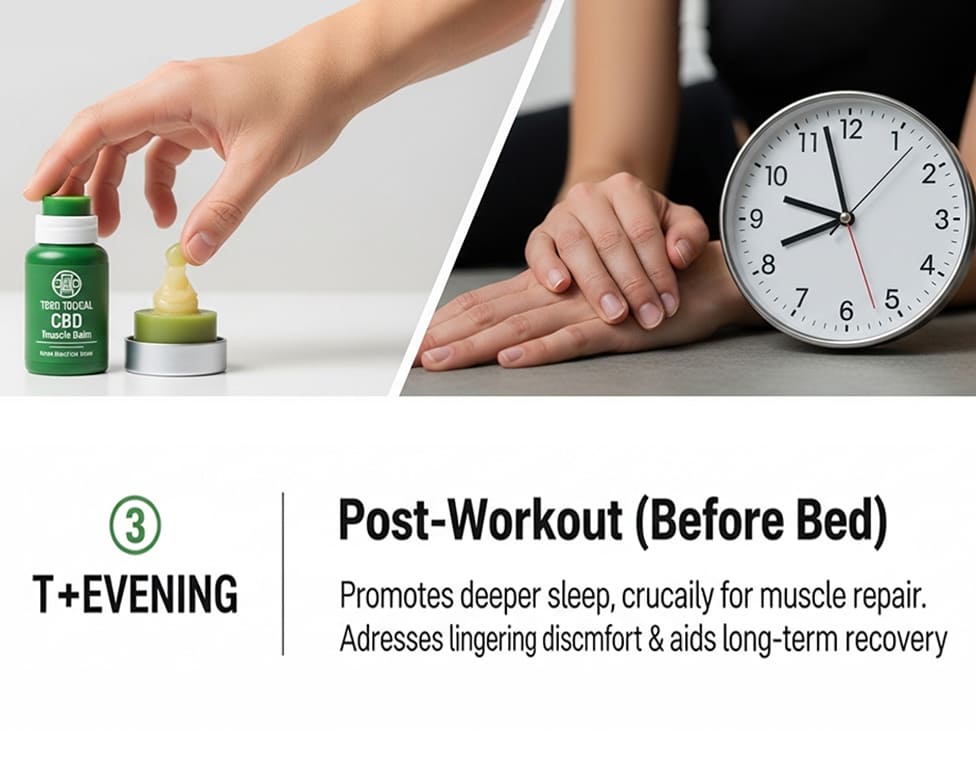
4. Use It Before Bed for Deep Recovery Support

Recovery does not stop when you leave the gym. The majority of muscle repair and hormonal regulation occurs during sleep. That makes nighttime an important window for strategic supplementation.

Taking CBD in the evening may support:

  • Easier relaxation before bed.
  • Reduced restlessness.
  • More consistent sleep cycles.
  • Improved next-day muscle comfort.

For athletes who train in the evening, post-workout and pre-sleep timing often overlap. If your sessions are earlier in the day, adding CBD to your nighttime wind-down routine can extend the benefits of recovery beyond the gym.

Sleep quality directly influences inflammation levels, energy restoration, and performance readiness. In that sense, bedtime use may be just as important as immediate post-workout timing.

To Sum It All Up!

Recovery isn’t a one-size-fits-all formula — and neither is CBD timing. Some people prefer it right after training when their body starts winding down. Others feel the difference when they use it before bed or even before stepping into the gym. It really comes down to how your body responds and what your routine looks like.

The smartest approach? Pay attention. Notice how you feel the next morning, how your muscles respond, and how well you’re sleeping. Small adjustments in timing can make a noticeable difference over weeks of consistent training.