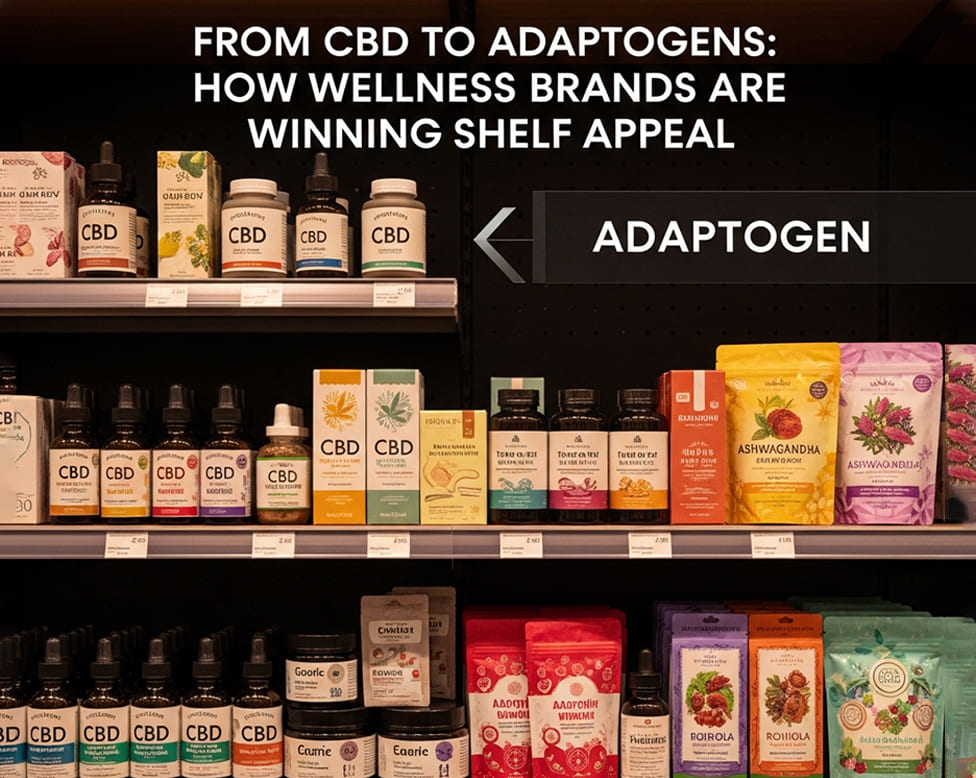
The supplement and wellness industry is experiencing a shift. CBD had its day. Now, it is adaptogens and functional mushrooms which are the new market hotshots.
And there's more to it…
Brands that leverage this change right now are dominating the shelf space. The ones that don't, will soon fade into oblivion.
The good thing is that the rules for building shelf appeal in this category are a lot simpler than one would assume. All one needs is an acute understanding of their health and wellness seeking customers and what they truly seek.
Without further ado, let's get into it.
In this blog, we will cover:
- Why Adaptogens Are Taking Over The Wellness Aisle?
- The Shelf Appeal Secrets Top Brands Use
- How Mushroom Supplements Became A Wellness Powerhouse
- Building A Winning Product Strategy
Why Adaptogens Are Taking Over The Wellness Aisle?
CBD opened up the world of alternative wellness to the public. But, it is the adaptogens that are enjoying a ride on that bus.
Adaptogens are natural compounds extracted from plants and mushrooms. These supplements work with the body to provide an optimal response to stress and anxiety. These natural compounds have been around for ages in the sphere of traditional medicine and are now seen in popular products…
Coffee, protein powders and gummy supplements.
The statistics tell the same story. The global market for functional mushrooms is growing at 10.45% annually and is on course to generate over $45 billion by 2034.
This is substantial growth by any measure.
Today's consumers are on a mission to hunt down adaptogenic superfoods like reishi, lion's mane and cordyceps. This audience is searching for natural solutions to enhance immunity, focus and curb stress in their busy lives. And, consumers are willing to pay a premium for products they can trust.
This is where the shrewd brands have placed their bets. The demand for mushroom gummies is surging as more customers discover adaptogenic supplements. The trend has now become the mainstream…
There's no looking back!
The Shelf Appeal Secrets Top Brands Use
A product can land itself on a shelf, but it is another challenge to make sure it flies off the shelf.
Winning brands are aware of the importance of Shelf Appeal and how to go about it.
Minimalist Packaging Wins
In the world of adaptogenic supplements, it is the minimalist design with clear messaging which has taken centre stage. It is all about simplifying the product for the consumer. No one has time to go through the rigmarole of decoding jargons and confounding science on the product's package.
Minimalistic design with neutral colour schemes and easy-to-read fonts are what's in vogue.
If a brand is serious about making a dent, then the packages would only be screaming about the product. No fluff. No confusion.
Transparency is Key
Wellness consumers are no fools. They research and review the products and their ingredients before buying them. They also look for validation and proof that the supplements do in fact work.
Brands that are selling like hotcakes on the shelves are the ones with clear statements on the following:
- Ingredient sourcing and quality control measures
- Proof of third-party testing and certifications
- Precise information on dosage and the benefits it entails
- Honest statements supported by research and scientific studies
Consumers have a genuine interest in adaptogenic mushrooms and mushroom gummies, so they can sniff out insincere claims from miles away.
A transparent brand means loyal customers who would keep coming back for more.
Getting the Format Right
Capsules and pills are old news. Shoppers are looking for supplements that seamlessly integrate into their daily rituals.
Popularity of gummies is proof of that. These little chewables are convenient. They taste great and feel free of the burden of daily supplementation.
Mushroom beverages and powders are also on the rise. Coffee replacements featuring the power of lion's mane, cordyceps are becoming a common sight in specialty stores.
Winning brands on the shelf are the ones that make wellness convenient and fun.
How Mushroom Supplements Became A Wellness Powerhouse
Functional mushrooms are not a new entry. For centuries, they have been an integral part of Chinese medicine and ayurvedic practices.
What is new is that they are no more the proverbial secret ingredient.
The wellness industry finally saw what practitioners of ancient Chinese and ayurvedic practices had been aware of all this time. Mushrooms, in general, are helpful for:
- Immunity (reishi).
- Cognitive enhancement (lion's mane)
- Energy (cordyceps)
Now they are everywhere.
As per McKinsey research, 84% of US consumers say that wellness is one of the most important aspects of their life. This is a massive market looking for products that help them achieve their health and wellness goals.
The adaptogenic mushroom category is perfectly tailored to satisfy this need. After all, it has:
- Natural and plant-based ingredients
- Ancient knowledge validated by new-age science
- Various health benefits in one place
- Clean labels with a complete absence of synthetic additives
The only reason why mushroom supplements have graduated from local health stores to the shelves of big retail is the fact that it satisfies the needs of modern-day consumers.
Building A Winning Product Strategy
What is the difference between the brands that do well and the ones that lag behind? It all boils down to a few simple aspects.
Education is Key
Consumers need to be educated as to why adaptogenic mushrooms are a great pick. The brands that are killing it on the shelf don't just sell their products. They make their audience aware of the benefits and science behind the formulation.
This helps in creating a sense of trust and an informed customer who eventually becomes an advocate for the brand.
Content marketing becomes an important part of the brand's marketing and advertising activities. Blogs that tell their readers the difference between reishi and lion's mane mushrooms. Videos on the manufacturing process. Social media posts which decode and simplifies scientific research.
Brands who take up the mantle of educating their consumers are the ones who will create long-term relationships.
Quality is Everything
The supplements industry is trying hard to break a reputation of being unreliable. Cut cost on ingredients and sourcing, transparency and customer trust are the other areas that brands with integrity shy away from.
On the other hand, there are brands which have made the quality of their products and ingredients their USP (unique selling point). They are investing in superior quality. They get their product tested by a third-party and are upfront about their complete supply chain.
The outcome of the above factor is happy customers who are loyal to the brand and keep raving about it through positive reviews. It also sets a bar for new brands to measure themselves against.
Understand Where the Customers Are
The wellness consumer journey is a long one that involves different touchpoints. Research takes place online. But purchases are made at physical retail spaces. Or the other way round.
Brands have to have a prominent presence on both platforms. This means having an optimised ecommerce storefront while also having a powerful shelf presence in the brick-and-mortar outlets.
Know the Trends
The world of wellness moves fast. It is also a dynamic space that is always changing. The consumer preferences of today may be a thing of the past tomorrow.
It is important that the top brands understand their customer and their needs, are abreast of new-age research and are never shy of trying something new while still keeping their value proposition intact.
Final Thoughts
The CBD to adaptogens shift is not just about changing trends. It reflects how educated wellness customers have become with what they consume.
Consumers are on the lookout for natural products which work and transparent brands they can trust. And the products which make their health and wellness lifestyle as seamless as it gets.
Functional mushrooms and adaptogenic supplements cater to each of these needs. That is the sole reason why they are the ones hogging all the shelf space in the wellness industry.
Winning brands are the ones that realise one major fact…
Shelf appeal does not revolve around flashy packaging. It is about providing value to health and wellness focussed consumers who are on the lookout for great products and have high expectations from them.
Meet the standard. Set the bar.